


Scaling safe, user-friendly reusable packaging through tech and innovation


Key takeaways
- Packaging companies Borealis, Tomra, and Eco-Products are expanding reuse systems in the F&B industry.
- Reuse system adoption is driven by consumer interest in sustainability and convenience.
- Successful scaling relies on collaboration across the value chain, including advanced materials, digital tracking solutions, and iterative testing to ensure safety.
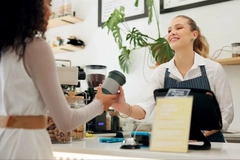
As consumer awareness surrounding waste reduction and the climate impact of single-use products intensifies, F&B packaging industry leaders are tackling the complex realities of scaling up reusable packaging systems that are commercially viable and environmentally impactful.
Packaging Insights speaks to Borealis, Tomra, and Eco-Products about innovating materials, design, and return mechanisms to support repeated use of cups and food containers.
Peter Voortmans, vice president for Marketing Consumer Products at Borealis, tells us: “Consumers who choose reusable packaging are typically making a deliberate, environmentally driven choice. For many, reuse is part of a broader effort to reduce waste, use less material overall, and lower carbon emissions.”

“At the same time, a broader shift is underway. There’s increasing awareness of issues such as waste, resource use, and climate impact, and this is starting to influence how a wide range of consumers think about packaging, and in particular food packaging.”
Closed-system solutions
Wendell Simonson, general manager at Eco-Products, highlights that early adoption of reuse systems remains strongest in closed-system environments, including the sports and entertainment space. “For most of these venues, the focus appears to be on the beverage side.”
Voortmans echoes the sentiment, spotlighting the reusable cup system from Borealis used at the 2026 Eurovision Song Contest in Austria. The reusable cups are produced using plastic packaging waste collected through Austria’s nationwide yellow bag and yellow bin system in both urban and rural areas.
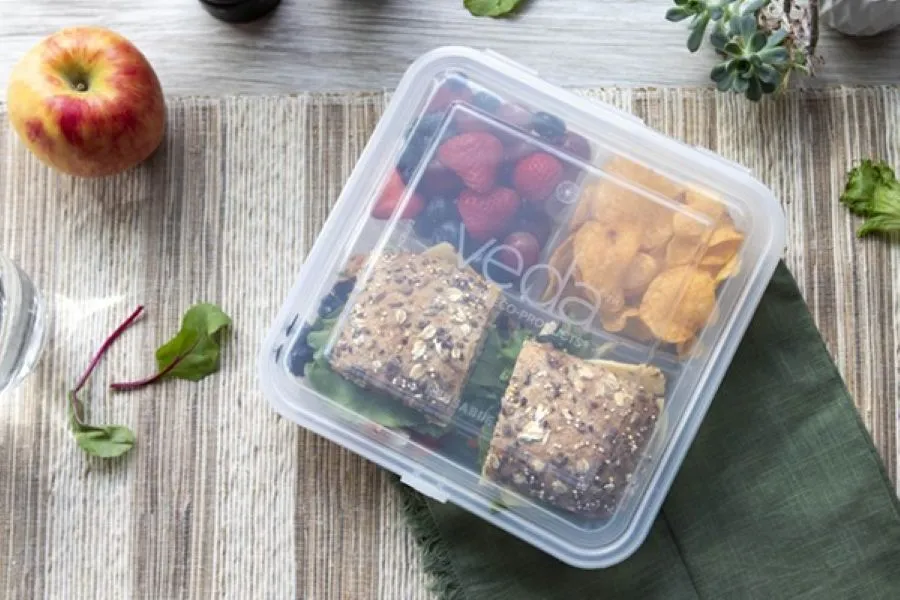 Customers can acquire the Veda containers through a one-time purchase, deposit, or dining-services program (Image credit: Eco-Products).Each cup features a printed QR code linking to DigiDot, Altstoff Recycling Austria’s digital recycling guide. DigiDot is available in 25 languages and was developed to support visitors in identifying correct waste separation options and nearby collection points.
Meanwhile, Eco-Products is expanding beyond beverage packaging with Veda, a line of durable foodservice containers that can be returned and reused by customers.
The solution features proprietary tracking and collection technology and is primarily designed for closed-system foodservice environments like colleges and universities, corporate campuses, military bases, and hospitals.
“We approach support of reuse in the same ways we approach support on the single-use side of the business,” Simonson shares.
“Navigating the complexities of end-of-life — whether it is tracking and collection for reuse, or working with composters and haulers for compostable products — is too much for many foodservice operations to take on. That’s why we have a dedicated team of specialists to assist with end-of-life and legislation in North America and the UK.”
Convenience and flexibility
Tomra has moved beyond the closed system, installing return machines in Freiburg Central Station, Germany. The solution enables cup returns at any time, and with an immediate deposit refund to the user’s digital payment method.
Tomra highlights convenience as a core principle of high-performing deposit return schemes (DRS) for drink container recycling. “The redemption system must be easy, accessible, and fair for everyone, and make it as easy as it was to purchase the product in the first place,” says Sven Hennebach, senior manager at Tomra Reuse.
“Each geography determines its own DRS design, based on local needs and circumstances. While the ‘return-to-retail’ is dominant and achieves up to 99% return rates in the best-performing markets, several regions explore convenience in returns beyond retail settings,” he adds.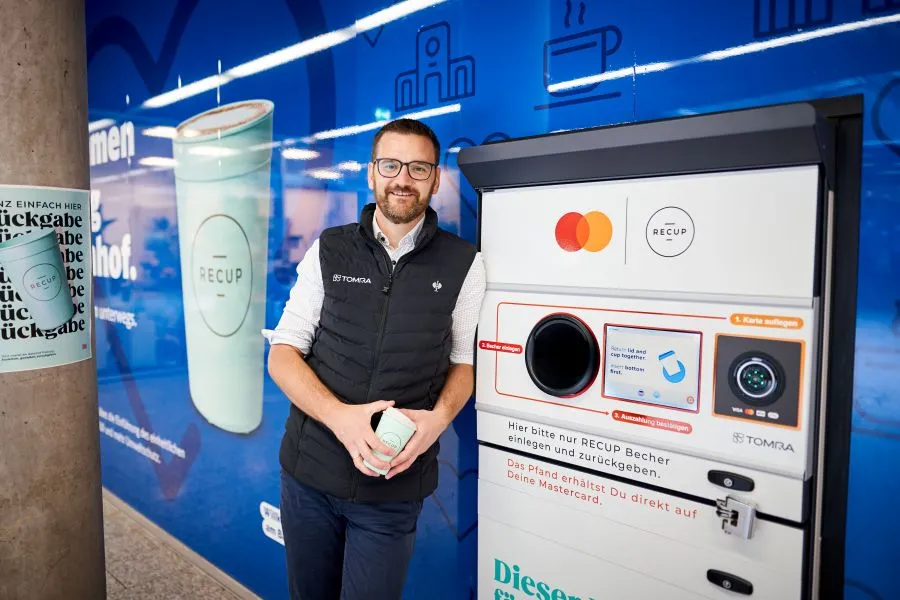 In Freiburg, Germany, Tomra Reuse partnered with Recup to place return points in the railway station (Image credit: Tomra).
“For reusable takeaway packaging, we see that the typical user journey is different. With public space return points, available 24/7 and with direct refunds to consumers’ payment card or wallet, Tomra Reuse enables scalable and flexible city-scale or venue ecosystems for reusable cups and food packaging.”
Innovation and safety
On the customer front, according to Voortmans, sustainability, advertising, and an interest in trying new products are some of the primary drivers for choosing reusable packaging. For material suppliers like Borealis, enabling these choices requires advanced and innovative solutions.
“This includes solutions designed for demanding reuse applications, as well as innovations that help reduce material use and solutions based on renewable and mechanically and chemically recycled feedstock,” he says.
To ensure that reusable food containers maintain the safety standards throughout multiple reuse cycles, Voortmans notes that it is key to understand how the packaging will be used and what it will be exposed to over time.
“Reusable containers go through repeated industrial dishwashing, handling, and transport, and are subject to mechanical stress throughout, so they need to be designed with those conditions in mind. It’s important to work with partners who have experience in long-life applications.”
Material durability
Last month, a pilot called Kiertis was testing an alternative to single-use takeaway containers. The pilot is part of the Sustainable Plastics Industry Transformation program co-founded by Borealis.
“In the Kiertis trial, the packaging is produced by Orthex, who specializes in durable plastic kitchenware designed for repeated use. Based on the expected use conditions, the design and material are selected to ensure durability and compliance with food contact requirements,” Voortmans furthers.
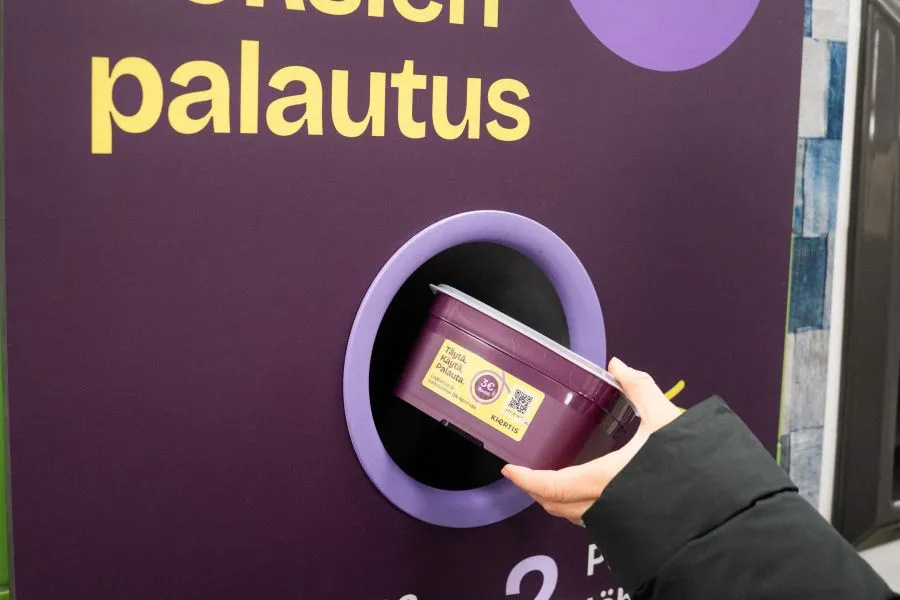 Kesko and S Group joined nine companies in the Kiertis project in Finland (Image credit: Borealis).“From there, performance is tested under real conditions. During the trial, containers are used, collected, washed, and reused multiple times, with quality checks between cycles to make sure they continue to meet the required standards.”
“These trials are an essential part of the development process, allowing adjustments to be made to the design or material if needed.”
Overcoming operational bottlenecks
Borealis and Eco-Products agree that in the process of scaling reuse systems, the primary obstacles do not occur on the factory floor.
“Most of the challenges to the growth of reuse in the foodservice industry are not manufacturing-related. The capabilities exist today to produce the products that are needed for reusable systems to function,” Simonson explains.
“The bigger challenges tend to be on the operations side of things, such as incentivizing return, scalable collection, and cost-effective washing.”
Voortmans highlights that scaling reuse systems will “depend on continued collaboration across the value chain, involving material suppliers, packaging producers, brand owners, and logistics partners.”
“From an innovation perspective, there won’t be a single breakthrough that unlocks the large-scale adoption of reuse systems. Instead, we need to focus on how everything works together in practice.”
“We need to ensure that different packaging designs can operate within the same system, while continuing to improve materials and design so packaging can withstand repeated use and industrial washing more effectively. We should also develop effective methods, such as digital identification solutions, to track and return packaging across multiple use cycles.”
“Overall, scaling reuse is a gradual process, driven by continuous improvements across materials, design, and system integration,” he concludes.