

Silgan adapts refillable pump for luxury glass fragrance bottles


Key takeaways
- Silgan has adapted its Melodie Pirouette SNI 13 pump for a portable molded glass fragrance bottle developed by Groupe Pochet.
- The removable pump works with Silgan’s Replay connector system, allowing brands to offer a distinctive bottle designed for repeated refills.
- Glass supports a premium look and reuse, although energy and carbon costs remain challenges in its production.
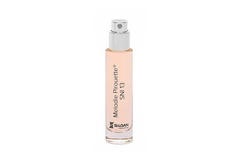 (Image credit: Silgan).
Silgan has launched a pump for a portable, molded glass fragrance bottle, developed by Groupe Pochet, tapping into personal care’s refillable packaging trend as consumers demand premium and reduced waste options.
The Melodie Pirouette SNI 13 is complementary with a range of spraying types from Silgan’s “Emotions of Spray” portable collection. It builds on Silgan’s existing screw-neck pump technology for SNI 15, which was adopted to be compatible with the SNI 13 bottle neck.
“We adapted our manufacturing processes for high-speed assembly, investing in new molds and rigorously testing the pump to ensure the ease of use, performance, and durability required for frequent refilling over time,” Sandy Gregory, marketing director of the Fragrance division at Silgan, tells Packaging Insights.

“To overcome this limitation, we developed a new version of the Melodie Pirouette SNI 13 pump to support brands in their positioning and portable luxury offering.”
Silgan highlights that the pump is designed to be long-lasting, catering to multiple refills over a long period of time. Moreover, when combined with Silgan’s Replay connector refill system, the removable Melodie Pirouette enables the personal care packager to expand its range of portable fragrance solutions.
Glass as a luxury
Historically, glass has been positioned in the personal care sector as an indication of premium quality. Silgan highlights how the material conveys quality, luxury, and authenticity.
“Molded glass in smaller, on-the-go formats allows brands to customize bottle shapes and aesthetics to reflect their identity,” adds Gregory.
“We offer a premium refill experience and enable brands to have full freedom in their creativity in the luxury market for smaller formats while offering a sustainable solution.”
In an interview with Packaging Insights, Simone Baratta, R&D manager at Bormioli Luigi, discussed the qualities of glass for luxurious and environmentally sustainable personal care packaging.
“In the beauty field, luxury, and high-end positioning are associated with glass packaging because of the brilliant material, the weight of the elements we have in our hand, the light effect we can have with the glass, and the shape that can be even more complex,” he said.
Earlier this month, Bormioli Luigi expanded its standard range of fragrance glass bottles with two mini formats for on-the-go consumer habits.
Meanwhile, Aesop, a L’Oréal brand, redesigned its fragrance bottle alongside the launch of a new fragrance, Unforeseen Aer.
The redesign featured a taller, slimmer amber glass bottle with a domed base and a basalt-textured cap. It maintains Aesop’s minimalist aesthetics but aims to “exist harmoniously within retail spaces alongside the rest of our formulations,” says Aï Kato, Aesop’s creative director.
Assessing glass’s sustainability
Increasingly, glass is viewed as a sign of sustainability due to its refillability and recyclability. However, some have pointed to the materials’ high energy production costs.
In a discussion about the EU’s Industrial Accelerator Act, the European Container Glass Federation told Packaging Insights that the EU must address “persistently” high energy and carbon costs and improve access to high-quality cullet.
Additionally, Dorota Napierska, toxic-free circular-economy policy officer at Zero Waste Europe, shared her views on how glass is a safer alternative to single-use plastic packaging, which can often contain chemicals harmful to human health and the environment.
“A packaging material that is considered to be among the safest today is glass. If applied in reusable/refillable products, glass means safe and recyclable packaging — a true circular, sustainable packaging product,” she said.
Meanwhile, Guido Stebner, chief technology officer at Vetropack Group, told Packaging Insights that the “most significant progress in glass circularity will come from system changes — improving collection infrastructure, harmonizing DRS, and leveraging digital tools for traceability.”