



UK pEPR fees spark mixed industry reactions as plastic and wood costs rise
Key takeaways
- PackUK has confirmed its 2026–2027 packaging EPR fees, in line with its traffic light system that rewards recyclability and penalizes difficult-to-recycle packaging.
- Ecosurety warns that higher-than-expected fees for plastic and wood undermine producers’ financial planning and packaging redesign efforts.
- British Glass welcomes the modulated fees, highlighting the financial benefits for highly recyclable materials and opportunities to strengthen the UK circular economy.

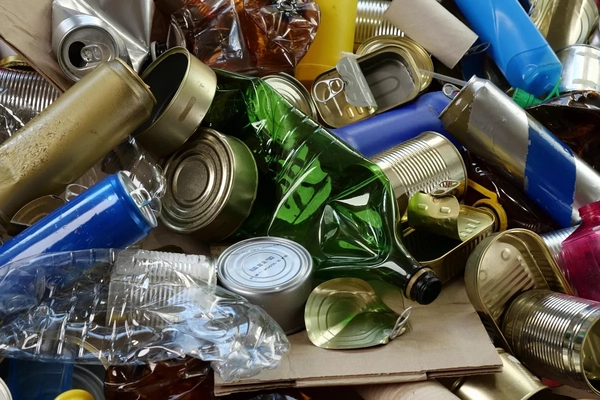
PackUK has published its packaging EPR (pEPR) waste disposal fees for 2026–2027, which follows its traffic light system based on material recyclability. The modulated system aims to incentivize sustainable packaging and follows the UK Recyclability Assessment Methodology (RAM).
The fees have been met with a mix of industry reactions, with Ecosurety pointing to unexpectedly high fees while British Glass says the fees support circular materials.
In the traffic light system, material categories such as aluminum, glass, paper, and steel are predominantly considered green materials under RAM, while plastic and wood are predominantly classified as red.
The recyclability of individual packaging items within each material category is determined by design and composition. Wood attracted the highest fees per metric ton, followed by fiber-based composites and plastic. Glass attracted the lowest fees, followed by paper and card.

Fee surcharge
Amber fees are set at the base rate, with red-rated incurring a 20% surcharge and green-rated receiving discounts of approximately 7–8%.
“The confirmed fees are higher than producers had been led to expect. Fees have risen for nearly every material, and wood and plastic stand out,” Louisa Goodfellow, policy manager at Ecosurety, tells Packaging Insights.
“Their base fees are up 29% and 11% respectively on the illustrative fees PackUK published last December, meaning an extra £131 (US$172) per metric ton for wood and £50 (US$65.50) per metric ton for plastic, and those producers will now have to absorb the difference at short notice.”
PackUK says that producers can now “clearly” see how much they can save by using more recyclable packaging, saying that over £2 billion (US$ 2.6 billion) has been provided to local authorities in the UK to improve waste management services.
“This transparency aims to support informed investment decisions and encourage producers to move away from difficult-to-recycle materials over time,” says the UK’s pEPR scheme administrator.
Recently, Biffa, a UK-based waste management company, reopened a materials recovery facility in Suffolk following a £6 million (US$7.85 million) investment from the pEPR, matched by Biffa.
Uncertainty for some, stability for others
The fees were calculated in part using PackUK’s local authority packaging cost and performance model, which uses data specifically reported by local authorities and cost data from a sample of local authorities.
Goodfellow is unconvinced about whether the increased modulated pEPR fees are helpful to producers.
“We believe PackUK is doing the best job it can within the current legislative framework, which means fees can only be confirmed once producers have reported their data, and they are unable to carry a surplus or deficit over between financial years,” she acknowledges.
“But businesses need certainty and need to be able to budget these fees in advance. When final figures move this much from the estimates, financial planning becomes very difficult.”
In contrast, British Glass has welcomed the confirmed pEPR fees, with its director, Nick Kirk, saying that it is “good news” not only for glass packagers, but for all highly recyclable materials.
“Despite significant increases in overall scheme costs, the fee for green rated glass has held steady, reflecting the fact that glass is widely collected, endlessly recyclable and cost-effective to recycle in the UK.”
The UK government recently announced that glass beverage containers sold directly from producers to pubs, restaurants, and other licensed hospitality venues will be exempt from pEPR fees from April 2027.
Moving forward
PackUK has also announced a defined resubmission deadline to provide a “clear point at which data is used to set fees” and aims to “help businesses to plan with confidence.”
However, Goodfellow says: “Producers need time and clear cost signals to redesign their packaging. The reward for doing so has also come in lower than expected, with green fees around 7–8% below amber against the 9% PackUK originally estimated.”
“With fees now confirmed, producers can expect to receive their notices of liability this week, so they should look out for theirs and make sure their contact details are up to date.”
For Kirk and the glass sector, the “best is yet to come,” with updated materials values, increased modulation factors, and improved recyclability assessments expected to be announced by PackUK.
“We expect the scheme to more accurately reward materials that support a genuinely UK circular economy,” he says.