

UPM-Sappi paper venture raises EU competition concerns

Key takeaways
- The European Commission warns that UPM and Sappi’s proposed joint venture could increase communication paper prices and reduce quality.
- The companies argue that the €1.42 billion partnership would address declining demand, structural overcapacity, and high energy costs.
- UPM and Sappi will formally respond to the EC’s preliminary concerns and continue discussions with regulators.
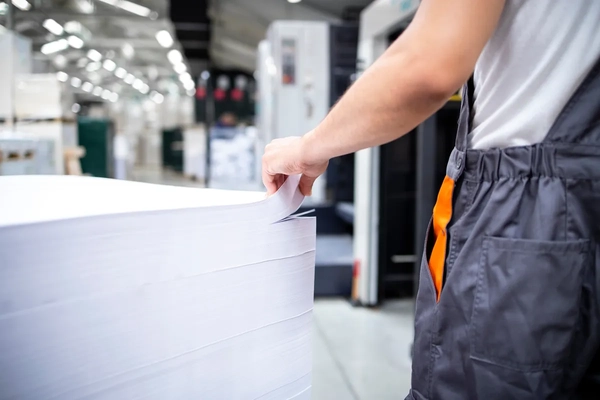
The European Commission (EC) has informed UPM and Sappi that its proposed joint venture may restrict competition in the communication paper market.
In May, UPM and Sappi signed a definitive agreement that proposed creating an independent, equal-owned partnership combining UPM’s global communication papers business and Sappi’s European graphic paper business.
In a Statement of Objections, the EC explains that it is concerned that the proposed partnership could increase prices and decrease quality. It says that it is “currently unconvinced” that the joint venture would bring “enough benefits” in cost savings, environmental performance, or resilience improvements, to “offset the potential harm” of the merger.
"The EC has informed UPM and Sappi of its preliminary view that its proposed joint venture may restrict competition in the markets for different types of communication paper, which is used for printed materials, such as magazines or books," an EC spokesperson tells Packaging Insights.
"In particular, EC has made the preliminary finding that the joint venture may have a dominant position in the markets for coated mechanical and wood free coated paper, and that it could exercise its market power to increase prices and reduce choice for customers."
We sit down with UPM and Sappi to understand their position on the investigation and the next steps of the joint venture.
Expanding graphic packaging
In April, the EC opened an investigation assessing whether the joint venture could reduce competition for certain communication papers in the European Economic Area (EEA), UK, and Switzerland. The investigation included analysis of internal documents provided by UPM and Sappi, and “views and data” from competitors, outlines the EC.
“Sappi is maintaining an open and constructive dialogue with the EC and remains confident that the preliminary concerns raised can be alleviated,” a spokesperson tells Packaging Insights.
Moreover, a UPM spokesperson tells us that the company is “confident that [it] will be able to respond fully to the EC’s preliminary concerns. The planned joint venture is a necessary step to secure reliable supply continuity for graphic paper customers in Europe.”
Addressing industry challenges
UPM and Sappi estimate the enterprise value of the planned business combination to be €1.42 billion (US$1.65 billion). The UPM spokesperson outlines that the joint venture would contribute to the “resilience of the entire European graphic paper industry, in the interest of customers.”
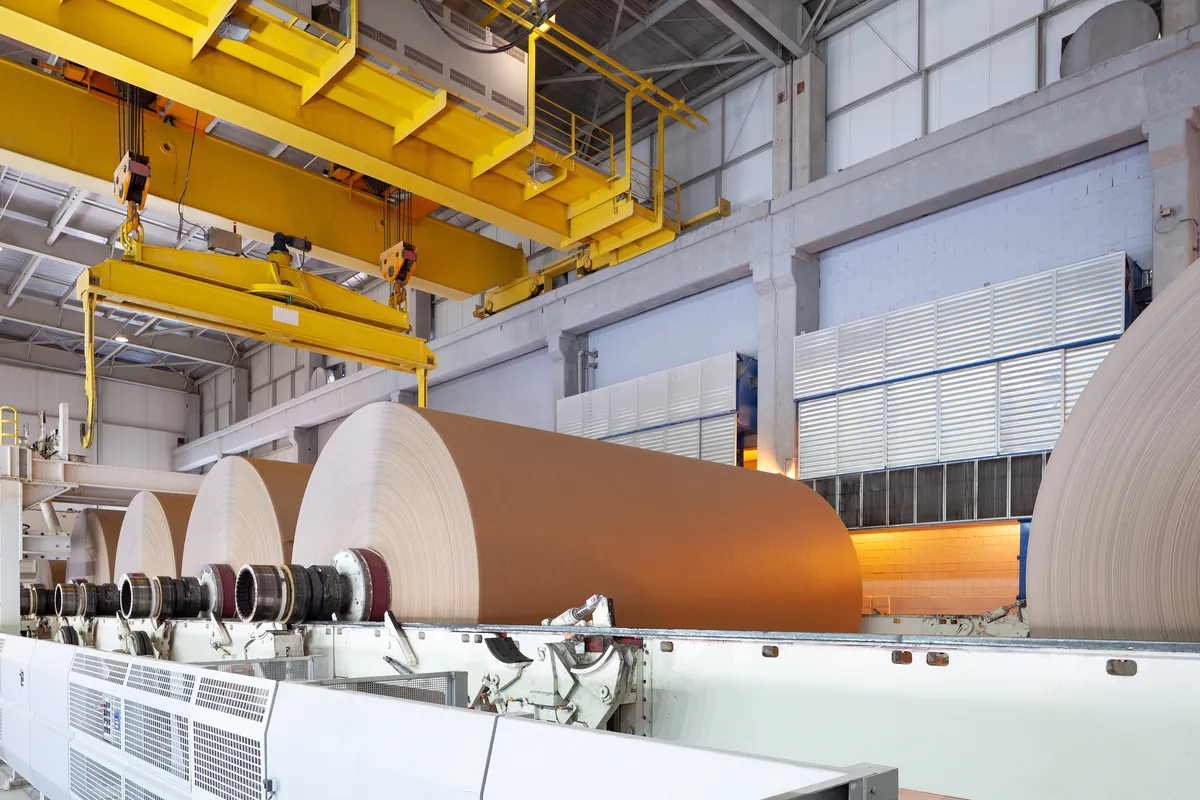 UPM and Sappi say that the joint venture would contribute to the “resilience" of the graphic paper industry.One of the EC’s responsibilities is to assess mergers and acquisitions involving companies with a turnover above certain thresholds. It aims to prevent concentrations that would “significantly impede” effective competition in the EEA.
The Sappi spokesperson tells us that the rationale for the proposed joint venture “remains strong,” especially in a declining graphic paper market. The joint venture aims to rationalize supply in an industry facing declining demand, structural overcapacity, and high energy costs, according to the companies.
“We remain confident that the proposed joint venture will create a more resilient and competitive business for the future, benefiting the European economy and current and future customers.”
Going forward
A Statement of Objections is a formal procedure in any EC investigation into mergers and acquisitions. The EC states that the Statement of Objections “does not prejudge the outcome of the investigation,” but seeks to update the companies in writing of the formal objections against the joint venture.
UPM and Sappi can now reply to the EC’s Statement of Objections, consult the case file, and request an oral hearing, as underscored by the EC.
The companies will respond “in detail” to the EC’s concerns, says the UPM spokesperson, adding that these are confidential discussions on which it cannot comment further.
The Sappi spokesperson tells us that the company’s advisors are also reviewing the Statement of Objections and are focused on responding to concerns raised by the EC.
“Sappi and UPM will submit their observations addressing the EC’s preliminary concerns and will continue to engage constructively with the EC to demonstrate the benefits of the transaction,” adds the Sappi spokesperson.
Consolidating business operations
 The EC says the joint venture could increase prices and decrease quality.Alongside amalgamated manufacturing processes, the packaging industry is entering a post-mega merger era, defined by consolidation, a prolonged downturn, and rising geopolitical uncertainty, say experts from Rabobank Packaging and Logistics.
In a previous interview with Packaging Insights, Rabobank senior analysts Xinnan Li, Natasha Valeeva, and Jim Owen discussed shifting competitive dynamics, future growth prospects, and the increasing impact of regulation and private equity on the industry.
In 2025, the EC approved International Paper’s acquisition of British e-commerce packaging giant DS Smith. Yet, a year after the merger, it announced plans to split into two regional, publicly traded companies. As part of the separation, its EMEA Packaging business will be spun off to shareholders, while IP intends to retain a meaningful ownership stake in the new company.
In other recent business moves, Cosmogen acquired Asquan, an international premium personal care company headquartered in Hong Kong and Shenzhen, China, to consolidate its global reach in the personal care packaging space.