



UPS rolls out RFID across US network to cut package misloads

Key takeaways
- UPS has completed a nationwide RFID rollout across its US small-package network, covering package cars and delivery facilities.
- The company says RFID has reduced package misloads by nearly 70% while improving real-time tracking.
- UPS is expanding the technology beyond package sensing into smart fulfillment and tracking.
 (Image credit: UPS).
UPS is highlighting the nationwide rollout of radio frequency identification (RFID) technology across its US small-package network, making it the “first major logistics provider to broadly roll out the technology across its integrated network.”
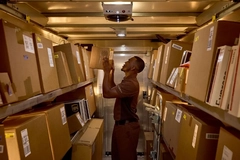
Deployed since April, the system is now installed in every package car in the US, at delivery facilities nationwide, and across shipments originating from more than 5,500 The UPS Store locations, including returns.
Jon Bell, Strategic Innovation lead at UPS’s Advanced Technology Group, says: “RFID has decreased misloads by nearly 70%, meaning less rework and more reliable delivery. The shift to sensing should also reduce the number of customer service calls asking about a package’s location.”
“The best part is that if RFID senses a package is off track, we can respond and do something about it. And we can often act fast enough that the package is still delivered on time. Customers are seeing the benefits firsthand, with real-time tracking and visibility from the point of pickup.”
End-to-end visibility
UPS says the rollout reflects years of collaboration across its operations, technology, engineering, marketing, sales, customer solutions, and The UPS Store network.
Bell emphasizes that the result has been a collaborative effort, with the label, vehicle, facility, systems, and people all working together. “Trust and alignment are everything.”
“UPS is taking a holistic, network-wide approach to how we use RFID. This work started as an initiative called Smart Package, Smart Facility. And now we’re extending into Smart Fulfillment and Smart Tracking to provide end-to-end transparency,” he adds.
Nick Basford, US strategy president at UPS, notes that while scanning provides package tracking, it remains a manual process that requires time and can be difficult to scale to meet customers’ growing visibility expectations.
“On the operations side, scanning comes with tradeoffs in terms of time, efficiency, and process design. To be effective, package visibility needs to be an intrinsic part of operations — not an add-on.”
“Sensing frees up our people to focus on the job at hand while the tech automatically keeps track of packages. This means we have better data and can give our customers more visibility from the time orders are fulfilled all the way to delivery. That visibility creates real opportunities for our customers — like inventory optimization and better service to their customers,” Basford continues.
“Plus, better data allows us to make better decisions faster. In some cases, that means noticing and managing a potential delay before it’s even on a customer’s radar.”
Previously, US supply chain technology provider Decklar (formerly Roambee) launched a 5G GPS peel-and-ship smart label for the logistics industry.