

Researchers develop water-based process for compostable food packs


Key takeaways
- Researchers at Virginia Tech, US, have developed a water-based process for creating multilayer bioplastic films.
- The method uses PHA, a biodegradable material, combined with a plant-based material to improve film durability and resistance to oxygen and moisture.
- This innovation enhances strength, barrier performance, and manufacturing ease for food and consumer packaging.
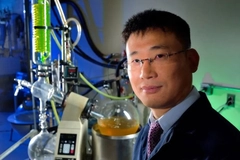 Young-Teck Kim, professor of sustainable biomaterials in the College of Natural Resources and Environment at Virginia Tech.
Researchers at Virginia Tech, US, have developed a water-based process to create multilayer bioplastic films that are “high-performing and easy to manufacture.” The engineered films exhibit enhanced strength and barrier performance, meeting requirements for food and consumer good packaging.
Published in Food Packaging and Shelf Life, the study aims to support replacing petroleum-based plastics with bioplastics in packaging, particularly for single-use products.
The new method is said to avoid toxic solvents and matches current industrial production speeds, making it viable for real-world use.
Young-Teck Kim, professor of sustainable biomaterials in the College of Natural Resources and Environment, says: “Scalability and non-toxicity are critical. Our goal was to create a process that the industry can realistically adopt while improving environmental outcomes.”
“This is just the first generation of the technology, and it shows strong potential to replace conventional materials and expand the use of bioplastics.”
Bioplastic trade-offs
The researchers note that bioplastics are often seen as a more sustainable alternative to fossil-based plastics, but their trade-offs have limited widespread adoption.
“Many current bioplastics require specific industrial facilities to break down. If they end up in the environment, they can behave like traditional plastics,” says Kim.
To tackle the issue, the scientists used polyhydroxyalkanoate (PHA), a type of bioplastic that can break down under home composting conditions and is biodegradable in natural environments, including soil and marine settings.
The researchers combined PHA with a plant-based material and used a water-based spray coating process. The researchers share that they can combine strengths, such as durability and resistance to oxygen and moisture, into a single product by layering materials.
“Existing manufacturing methods create technical challenges like weak bonding between layers or limited compatibility between materials,” Kim explains. In testing, the new films demonstrated stronger bonding between layers and better resistance to oxygen and water vapor, making them suitable for preserving packaged goods.