


Fiber-based packaging: Innovation confronts circularity barriers

Key takeaways
- PFAS-free coatings, recyclable inks, and removable adhesives are improving fiber packaging performance, but no universal barrier solution exists.
- Lightweighting and AI-assisted design can reduce material use while maintaining pack strength and controlling costs.
- Uneven recycling infrastructure, food-contact requirements, and complex surface treatments continue to limit real-world fiber circularity.

Fiber-based packaging has moved beyond skepticism of the material’s efficacy toward innovations in surface technology, such as plastic and PFAS-free barrier coatings, as well as bio-based inks and lightweighting efforts.
Packaging Insights speaks to experts from Aicomp, BoxWay Packaging Group, Flint Group, and MM Board & Paper to understand what still needs to be overcome in fiber packaging surface technology, as well as other challenges inhibiting fiber circularity, such as supply chain transparency and recycling infrastructure.
“Fiber-based packaging can now compete in more demanding markets, deliver reliable product protection, and remain valuable at the end of life,” says Jürgen Kleinrath, chief science officer for Board and Paper at MM Board & Paper.
“The real breakthrough is not simply a better coating or lighter board, but packaging that performs like the alternatives it is designed to replace while supporting a more circular material system.”
Barriers breakthroughs
Matthias Waltz, head of Group Software Solutions at Aicomp, explains that one technical barrier limiting fiber-circularity is the lack of solutions to replace grease barriers containing PFAS.
“PFAS as a grease barrier is banned from 2026, and for fat- and moisture-sensitive products, there simply is no easy one-to-one replacement. That’s a genuinely unsolved problem, not a detail.”
Moreover, the EU Packaging and Packaging Waste Regulation (PPWR) says that packaging must contain less than 5% ink by packaging weight, which Waltz argues “gets tight on heavily printed retail and shelf-ready packaging.” He also notes that adhesives, unless designed for removability from product design, can disrupt sorting and pulping.
Alessio Crivellari, product manager for Paper and Board Europe at Flint Group, concurs, explaining that during fiber repulping, inks and coatings should come off easily from a package.
He adds: “If they are not designed for this, they can reduce the quality and value of the recovered material or even make it unsuitable for reuse.”
Lightweighting by design
 Fiber packaging can now serve demanding markets, protect products reliably, and retain end-of-life value, says Kleinrath (Image credit: MM Board & Paper).While the experts note that innovation in surface technology is shaping fiber’s position as a circular solution, BoxWay Packaging Group’s CEO, Andrew Woollard, points to another development.
“Lightweighting packs with smarter, more efficiently designed material structures is the most promising route forward for fiber-based packaging,” he explains.
“Material reduction sits at the top of the waste hierarchy as the most effective way to reduce the environmental impact of packaging. Materials can never become waste if they are never used in the first place.”
Woollard also says that advances in digital engineering and AI-assisted design can help “unlock new potential” in the material’s circularity. BoxWay aims to optimize flute geometries, engineer microflute structures, and run finite element simulations to improve pack strength without adding more material.
“This is the most reliable way for companies to meet their sustainable packaging goals, while also protecting margins and keeping costs low, all of which are critical in the current market.”
Maintaining food safety
Barrier coatings ensure resistance to grease, moisture, and migration — and must be food contact safe. Companies like Xampla, Notpla, and Kelpi are innovating PFAS-free and plastic-free coatings from pea proteins and seaweed that are said to be food contact safe and circular.
However, Kleinrath at MM Board & Paper urges caution, telling us that the “technically strongest barrier is not automatically the best circular solution if it makes fiber separation unnecessarily difficult.”
He explains that, to ensure food-contact safety, fiber packaging must be tested in a complete packaging system. “The industry needs to understand both how a pack performs in use and how it behaves in the appropriate recycling process.”
 Woollard suggests that smarter, lightweight material structures offer the clearest path forward for fiber packaging (Image credit: Boxway).Aicomp’s Waltz asserts that “food contact is the hardest knot” as chemical migration limits under EU 1935/2004 and PPWR force brands “back toward the barrier layers that hurt recyclability.”
“Where we come in at Aicomp is the data side. We carry recyclability, material structure and substance restrictions directly in the product configuration, so a ‘circular’ fiber pack is built that way from the design stage and not assessed after the fact.”
Is recycling holding fiber back?
Unlike the other experts, who largely attest that the main challenge to fiber packaging’s circularity is sustainable barrier coatings, Woollard points to another limiting factor: recycling systems.
“Recycling infrastructure itself is probably the biggest challenge” to making fiber-based packaging circular, he argues. Specifically, he points to the lack of harmonized infrastructure across regions and countries.
“This makes it difficult to determine what real-world circularity actually looks like. Even within nations, one state or region can have a wildly different infrastructure from another. This makes material and structural packaging innovation all the more important.”
Aicomp’s Waltz does not share Woollard's infrastructure concerns. “Fiber is already strong on recycling,” he says. “The problem isn’t that fiber recycles badly, it’s that we tend to undo that good recyclability at the design stage, with laminations, barriers, and too much ink.”
Recently, the Paper Manufacturers Association of South Africa (PAMSA) reported that South Africa reached a 63.3% paper recycling rate in 2025, up from 60% in 2024. A PAMSA spokesperson told Packaging Insights that plastic recycling streams cannot compete with paper’s efficiency.
Shifting the environmental burden
Fiber-based packaging must balance recyclability and product performance without shifting environmental burdens elsewhere, stress the experts.
Kleinrath says that choices surrounding material reduction cannot be considered solely in isolation, as a package that fails to protect the product can lead to damage or waste.
“The right approach,” he underscores, “is to assess the full packaging system,” from product sensitivity, barriers, converting performance, and transport to material efficiency and recycling routes.
 Aicomp embeds recyclability, material structure, and substance restriction data into product configuration (Image credit: Aicomp).“Environmental indicators such as energy, water, timber use, carbon footprint, and recycled content should also be considered together, rather than selecting one measure as the sole definition of sustainability.”
For example, when comparing virgin fiber to recycled fiber, Kleinrath suggests there is “no universal answer,” pointing to each material’s benefits in certain circumstances.
Flint Group’s Crivellari answer to the performance-recyclability paradox also lies in a holistic, LCA-based approach to material choice decisions.
Moreover, he stresses that “a key consideration for any pack is that it must be fit for its intended purpose.”
“Any pack that fails to meet the requirements placed on it — particularly in food contact applications — may lead to adverse outcomes like product damage, ultimately increasing waste. In many cases, food waste’s environmental impact may far exceed that of the packaging itself.”
He adds that designing for recycling at the early stage of a package production is “essential.”
“In practice, this means selecting inks, coatings, adhesives, and substrates that are well known to be compatible with recycling infrastructure, rather than attempting to retrofit sustainability further down the line.”
As a result, Crivellari says that fiber-based packaging is becoming more functional and “better aligned” with the principles of the circular economy.
Waltz attests that the PPWR’s minimization principle in Article 9 provides a “usable level” for reducing cherry-picking sustainability claims in fiber packaging.
“Packaging must be no more than necessary to protect its content, but every protective layer has to be justified by a real product characteristic, like moisture sensitivity, fragility, fat content, or shelf life.”
Well-positioned fiber
Regulations like the PPWR and EPR schemes around the globe are largely speeding up the transition to recyclable formats, like fiber-based packaging.
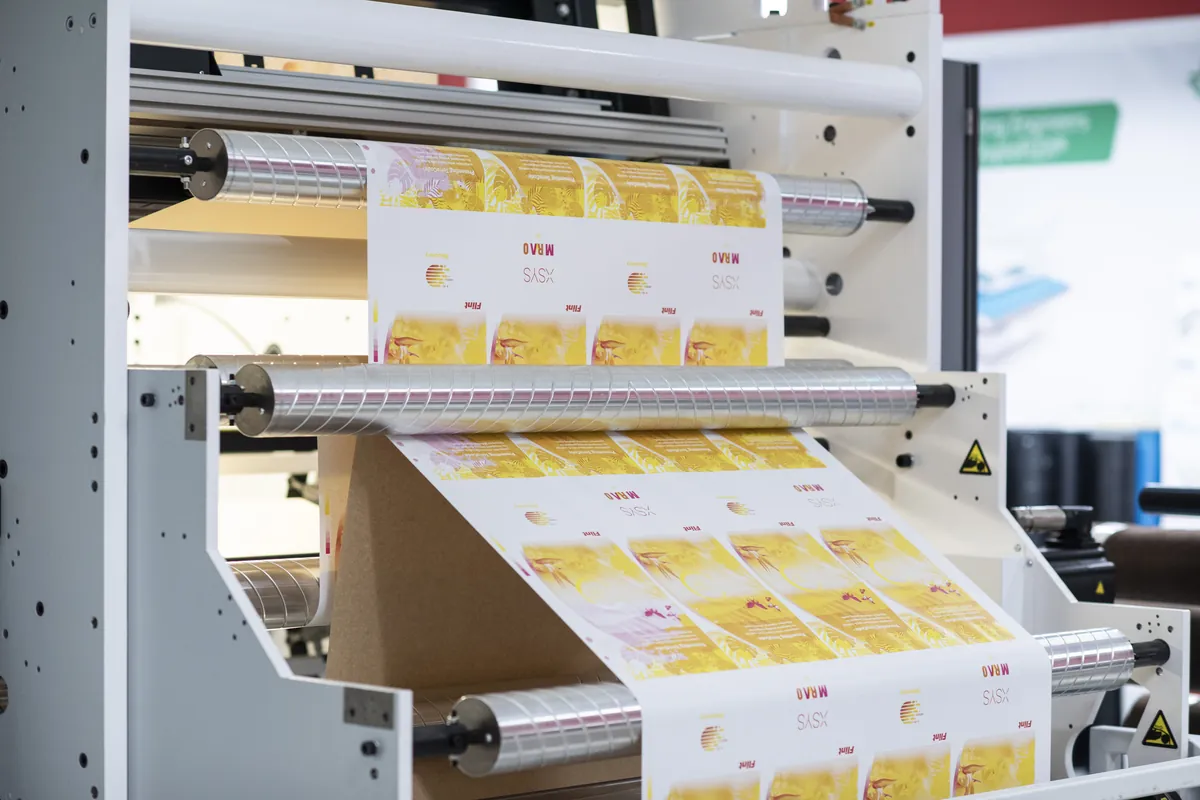 Flint Group’s Crivellari says resolving the performance-recyclability paradox requires a holistic, LCA-based approach to material selection (Image credit: Flint Group).“The PPWR places greater attention on the full packaging lifecycle, including waste prevention, recyclability, and performance at the end of life. EPR schemes are also making the economic consequences of material choices more visible, although national structures and fee calculations still vary,” says Kleinrath.
Although circularity challenges to barrier, ink, and adhesive coatings remain, as well as the balance between performance and recyclability, the experts are confident of fiber’s position as a stable, sustainable packaging material.
Woollard underscores that “fiber-based materials are already widely recycled, making them the ideal platform for further innovations,” while Crivellari says that with “greater scrutiny comes a heightened need for transparency and accountability.”
Waltz asserts that the effect of the PPWR and EPR is investment shifts away from the material alone and toward the “systems that can actually prove compliance.”
He concludes: “Things like substance restrictions, recyclability grades, and minimization evidence, across thousands of articles. That’s exactly where our customers are spending right now.”