


LYB installs pyrolysis reactors at German chemical recycling facility

Key takeaways
- LYB has established two pyrolysis reactors at its MoReTec chemical recycling facility in Wesseling, Germany.
- The technology converts hard-to-recycle plastics into pyrolysis oil and gas for new polymers.
- LYB reports a plastic-to-plastic yield exceeding 80%, while renewable-electric heating and lower processing temperatures aim to reduce the process’s carbon footprint.
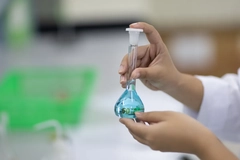
LyondellBasell (LYB) has installed two pyrolysis reactors at its new chemical recycling facility in Wesseling, Germany.
The reactors, alongside LYB’s proprietary catalyst for chemical recycling, can break down hard-to-recycle plastic waste into smaller molecules that are converted into feedstock for new polymers, suitable for flexible food packaging.
The facility, currently under construction, uses LYB’s MoReTec technology to induce the chemical recycling process for hard-to-recycle plastics. It is scheduled to begin operating in 2026.
LYB says the process uses lower processing temperatures while the heating system for the reactors runs on renewable electricity, which “significantly reduces the carbon footprint compared to fossil alternatives.”
The chemical recycling technology produces pyrolysis oil and gas that can be recovered as raw materials instead of using the gas as fuel.
“With this technology, we are able to offer to our customers recycled content that can be used in applications like food packaging,” says Paula Sanabria Luque, senior director of marketing and commercial development for Circular and Low Carbon Solutions, EMEAI, at LYB.
“We are able to integrate both the liquid output and the gas output of the MoReTec facility, once the plastic waste feedstock has gone into our crackers as feedstock. So with that, they have a very high yield from plastic-to-plastic.”
The company reports a plastic-to-plastic yield of more than 80%, depending on feedstock quality.
Advancing chemical recycling
Sanadria Luque adds that, while LYB also offers mechanically recycled technologies, the company is also focusing on chemical recycling, which she describes as a “very important pillar for LYB.”
Innovation and investment in chemical recycling are increasing as the packaging industry looks for methods to enhance circularity — though some critics point to the processes’ high energy demands, emissions, costs, and uncertain scalability.
Martino Gabellich, VP Advanced Recycling and LC Solutions at LYB, says: “There is an issue with plastic waste, and so we want to find the solution. But there is also a desire to then transform the plastic back into plastic.”
Recently, the European Commission adopted a new Implementing Decision on the calculation, verification, and reporting of data on chemically recycled content in single-use plastic beverage bottles for compliance with the EU Single-Use Plastics Directive.
Meanwhile, Neste, Alterra, and Technip Energies launched Nerea, a modular chemical recycling plant solution that aims to standardize chemical recycling processes and ramp up industry adoption.