



Pack Expo 2026 review: Industry balances material optimization, shelf life and recyclability

Key takeaways
- Pack Expo 2026 highlighted industry efforts to optimize material use, improve barrier performance, and increase the availability of post-consumer recycled (PCR) materials.
- Packaging suppliers are developing solutions to extend food shelf life, reduce food waste, and improve recyclability through simplified and fiber-based structures.
- Companies are navigating diverging packaging regulations in the EU and US, while automation, robotics, and AI are gaining attention across the industry.
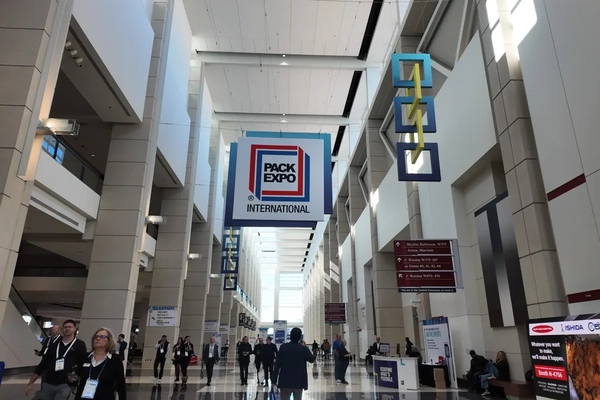
Over 72,000 total packaging and processing professionals attended the Pack Expo 2026 trade show in Chicago, US, last week (Oct 18–21). Conversations with companies on the show floor highlighted the growing industry demand for material optimization and recyclable packaging structures amid evolving regulatory requirements.
Packaging Insights spoke to Peak Nano, ProAmpac, Uflex, and SIG about the packaging industry’s efforts to reduce material use without compromising performance, increase the availability of post-consumer recycled (PCR) materials, and simplify structures to support recyclability.
At the same time, food protection and shelf-life extension remained priorities, as companies look to the development of new packaging technology to reduce food waste and to improve cost efficiency.
“Pack Expo 2026 was a great show, with strong attendance as usual across many different packaging markets,” Pam Wilson, PhD, director of Global Applications Engineering and Sales at Peak Nano, told us.
“We met with brand owners, converters, and other film manufacturers, and heard three consistent priorities: downgauging films to reduce costs and lower EPR fees while maintaining performance; moving toward monomaterial structures to support recyclability as teams respond to EPRs and EU Packaging and Packaging Waste Regulation (PPWR) requirements; and achieving better barrier performance with less material.”
Wilson further noted more material suppliers offering PCR grades. “Across these conversations, the focus was on practical ways to reduce material use and improve recyclability without compromising packaging performance.”
Material optimization
Similar to Peak Nano’s Wilson, Nantshree Chaturvedi, vice chairman and CEO of Flex Films at Uflex, highlighted the importance of developing materials that respond to changing customer requirements.
“Pack Expo 2026 continues to be a valuable platform for Flex Films to showcase how it is keeping pace with the packaging industry’s changing needs through material innovation and sustainability.
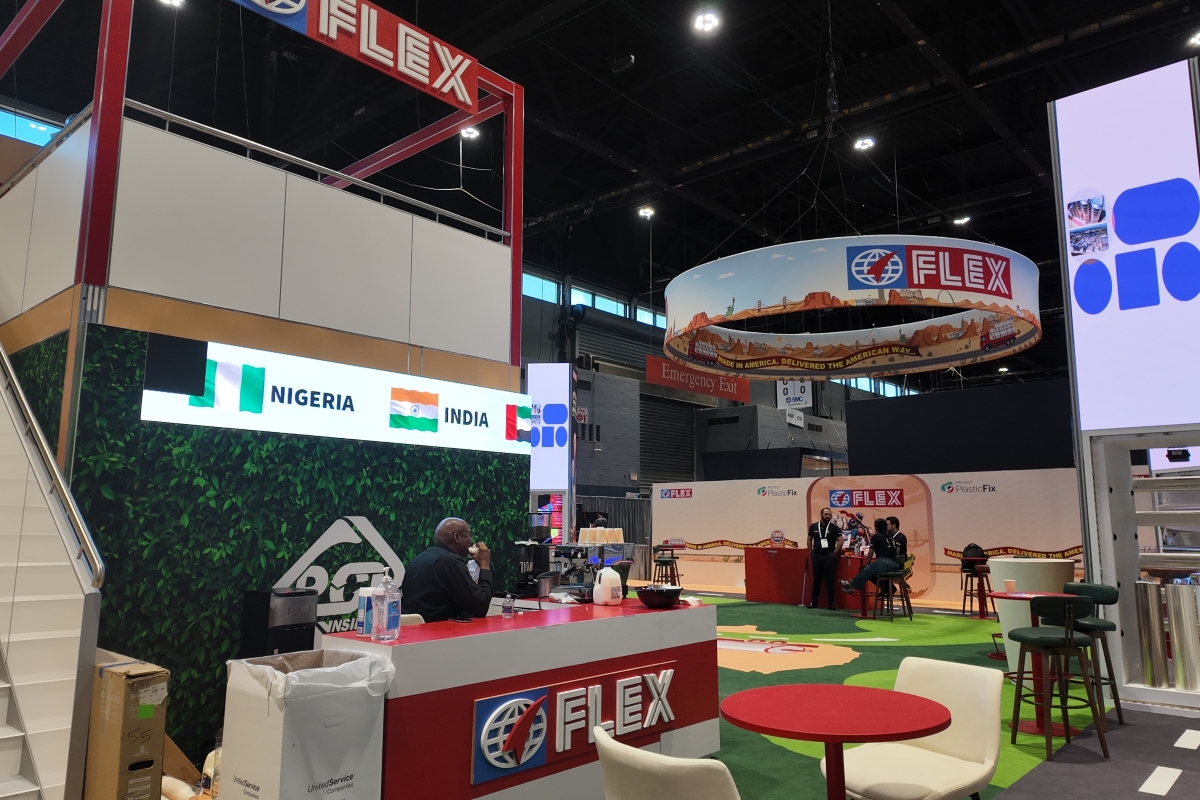 Uflex’s Flex Films showcased specialty and high-performance packaging films, including with PCR content.At this year’s edition of the show, Flex Films exhibited its range of specialty and high-performance packaging films, including PCR films, said to support the transition toward material circularity. “As the industry looks to balance performance with more responsible use of resources, we remain focused on delivering innovation.”
The company points to its US manufacturing presence as an important part of its approach to serving customers in the region.
“The US is a key market for us, and our manufacturing facility in Elizabethtown, Kentucky, enables us to serve customers locally, respond to market needs, and build closer partnerships. This regional presence is backed by a global manufacturing network for packaging films across India, the UAE, Mexico, Egypt, Poland, Hungary, Nigeria, and the Commonwealth of Independent States.”
“Our strength lies in combining local market understanding, global manufacturing capabilities, and continuous technological advancement. By working closely with customers and anticipating changing market needs, we aim to deliver packaging films that combine performance, reliability, and sustainability.”
Shelf life optimization
Finding new ways to extend product shelf life for the F&B industry stood out as a priority for exhibitors, including ProAmpac, which said customers are increasingly seeking new technologies that keep products fresh, and SIG, which highlighted the role of aseptic packaging.
“Every customer is asking how they can extend the shelf life of their product. Technology is going to be a huge help for that,” Hesam Tabatabaei, chief technology officer at ProAmpac, told us.
Tabatabaei emphasized that longer shelf life can also deliver financial benefits for retailers and food producers, particularly for high-value products such as meat.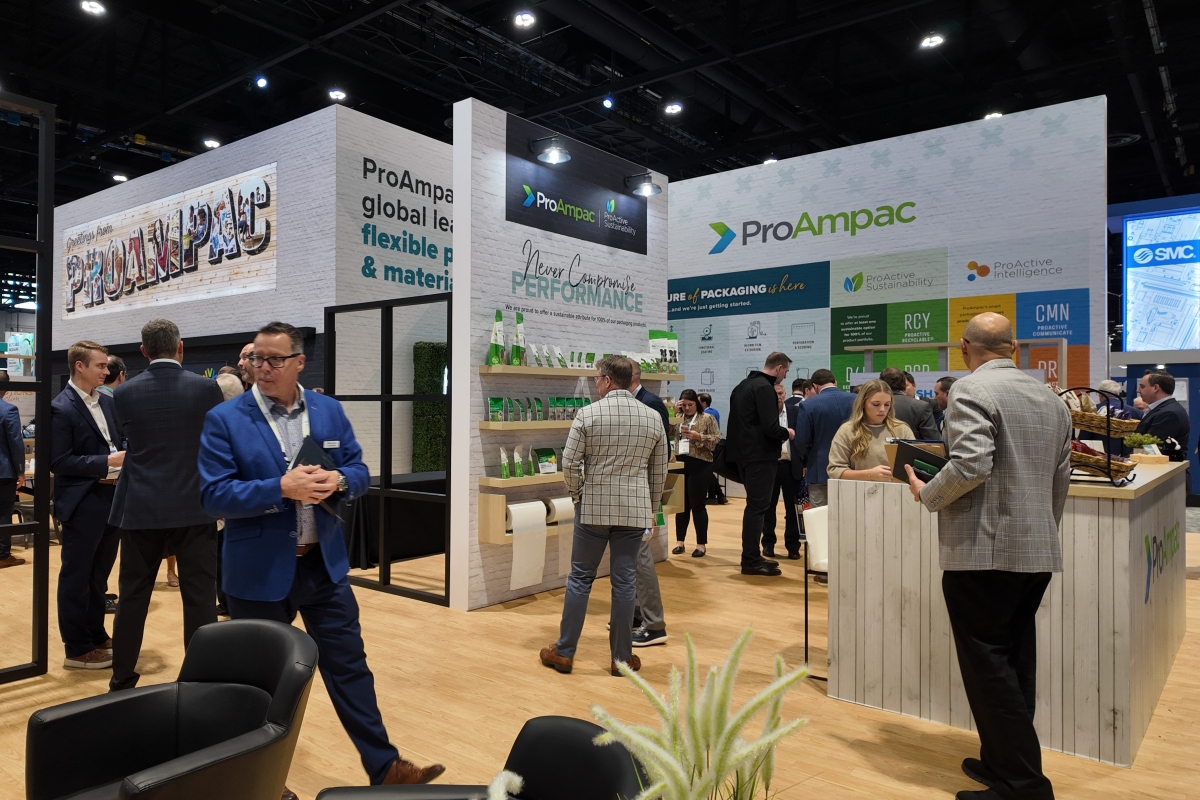 ProAmpac presented flexible packaging solutions designed to extend food shelf life and optimize material use.
“If you can extend the product shelf life and reduce markdowns that are implemented in stores, it’s going to be a huge cost benefit for a lot of our customers,” he said. “It’s all about the value that packaging brings to the table with this food packaging.”
Additionally, Jami Leveen, head of sustainability and corporate relations for North America at SIG, points to the role of aseptic carton packaging in reducing food waste and energy consumption throughout the supply chain. She pointed out that the technology can keep products safe and shelf-stable for up to 12 months without refrigeration or preservatives, while enabling wider distribution to regions with limited cold-chain infrastructure.
“We see product protection, resource efficiency, and circularity as objectives that must be achieved together. We innovate our carton structures to reduce dependence on fossil-based materials, increase the share of paper and renewable materials, and simplify material structures to make recycling easier, while maintaining the barrier performance needed for long shelf life and food safety.”
She said that SIG is also responding to changing consumer preferences for natural ingredients, fewer preservatives, and products with high nutritional quality, which are increasing demand for packaging technologies that preserve food safely over longer periods.
ProAmpac identifies the growing protein category as another area of opportunity for packaging innovation, saying its product line could support developments in protein-related applications.
Speaking to Tetra Pak, SIG, and TNA live on the show floor, Packaging Insights explored how North American consumers' demand for health-conscious food products is driving the need for small-format packaging for portion control, food waste reduction, and on-the-go consumption.
Recycling focus
Alongside product protection, ProAmpac and SIG said that they are working to improve packaging material efficiency and recyclability.
ProAmpac’s Tabatabaei points to continued developments in film technology and a shift toward fiber-based formats, as customers seek solutions compatible with curbside recycling.
“At Pack Expo 2026, you can also see a shift toward fiber-based packaging as well, because customers are looking for more of a curbside-recyclable solution, and that’s something we’re trying to continue to innovate in, to bring a lot of technology to the market.”
Meanwhile, Leveen said that SIG is focusing on reducing dependence on fossil-based materials, increasing the share of paper and renewable materials, and simplifying carton structures to make recycling easier without compromising barrier performance.
.JPG) SIG highlighted efforts to reduce reliance on fossil-based materials and increase the use of paper and renewable alternatives. One of the main challenges she spots is ensuring that collection and recycling infrastructure continues to expand, so cartons can be effectively recovered and recycled after use. Another challenge is further simplifying material structures while maintaining the high barrier properties necessary to protect sensitive food and beverage products, she adds.
Regulatory divergences
Regulation was another important theme at Pack Expo 2026, particularly the challenge of serving markets with different packaging requirements.
“The EU is moving toward increasingly harmonized and comprehensive packaging legislation, particularly in areas such as recyclability, recycled content, waste reduction, and producer responsibility,” Leveen continues. “For example, SIG’s sustainability and product development roadmap is closely aligned with the EU’s PPWR and related circular economy requirements.”
“In contrast, packaging requirements in the US are often shaped by individual states, creating a more fragmented regulatory landscape.
At the show, we also discussed the evolution of packaging EPRs across states with LyondellBasell.
For companies operating globally, this regulatory divergence means navigating different requirements for packaging design, labeling, reporting, recycled content, and end-of-life management across markets, Leveen highlights.
“As a result, packaging manufacturers need solutions that can meet all expectations while maintaining product safety, performance, and operational efficiency. At SIG, we see ongoing innovation in materials, recyclability, and circularity as essential to ensuring compliance with evolving regulations and supporting customers across different markets.”
The company says regulatory changes are also influencing beverage carton design, accelerating the shift toward formats that are easier to recycle and contain higher proportions of renewable or recycled materials.
Regulatory requirements are also encouraging greater transparency around sourcing, recycled content, and end-of-life performance, making these considerations an increasingly important part of product design from the earliest development stages.
Automation, robotics, and AI also stood out at Pack Expo 2026, with Siemens showcasing its AI-powered digital twin for flexible filling and Waites's sensors said to tackle downtime and maintenance shortages.