


Packaging may contribute to contaminants in seafood ready meals, study finds

Key takeaways
- A URV study found that contaminant levels in seafood-based ready meals were generally higher than those previously reported in raw fish and shellfish from the same region.
- Phthalate esters and organophosphate esters were among the most prominent contaminants.
- Despite detecting compounds from several chemical families, researchers concluded that the measured levels did not pose a significant health risk.
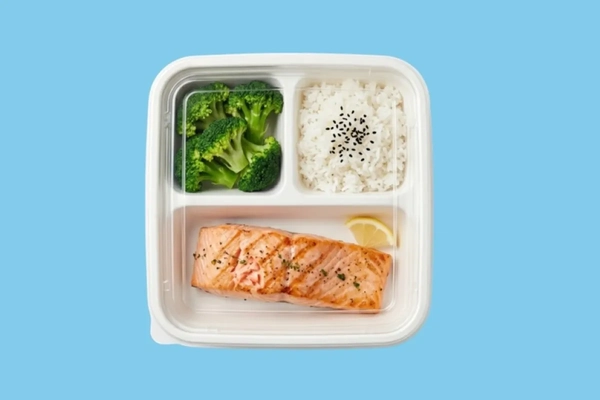
A study by the University of Rovira i Virgilihas (URV), Spain, has unveiled that chemical contaminant levels found in pre-packaged seafood-based ready meals are, in general, higher than those described in previous studies of raw fish and shellfish in Catalonia.
The study, published in the journal Analytical and Bioanalytical Chemistry, examined 18 commercial products that were pre-cooked, fresh, chilled, or frozen and made from some of the most commonly consumed species in Catalonia, including squid, salmon, mussels, prawns, sardines, hake, and cod.
“In this research, samples were grouped into three pre-processing categories. Each meal was packaged in plastic-based containers, with different packaging formats represented across samples,” say the researchers.
“The result shows that, overall, phthalate esters were the most contributing family in most meals, except for mussel-based dishes, and certain cod-based meals. The consistently high concentrations of phthalate esters and organophosphate esters suggest that packaging materials may represent a relevant contamination source, likely through migration processes.”
Understanding dietary exposure
The scientists looked for 29 compounds belonging to different chemical families — phthalates, organophosphates, benzothiazoles, and synthetic fragrances — and detected most of them in at least one of the samples studied.
The study does not attribute the contamination to a single source. Various factors may be involved, such as the product origin, species type, fat content, cooking process, preservation method, and packaging materials.
However, despite the presence of these contaminants, the risk assessment concluded that the levels detected do not pose a significant health risk, say the scientists.
Earlier this year, a study by research consultancy Earth Action revealed that around 1,000 tons of microplastics can migrate from packaging into food annually, with many of the particles small enough to enter human cell barriers and potentially interact with biological systems.
In response, the industry is exploring ready-meal packaging solutions that use less plastic and have a lower environmental impact.
Recently, Duni Group unveiled a sealable paper bowl for ready meals, utilizing hermetic sealing and modified atmosphere packaging to extend product freshness.
Last year, Rayonier Advanced Materials launched its Enhanced Freezer Application for folding cartonboard. The solution can be applied to various frozen food products, including ready meal packaging and protein trays.
Marks & Spencer introduced a paper fiber ready meal tray trial for its Fiery Chicken Tikka Masala. Available in stores and on online grocer Ocado, the tray is said to be oven- and microwave-safe.