



Shawpak targets pharma automation with compact packaging machines

Key takeaways
- Shawpak has unveiled three pharmaceutical packaging machines focused on die-cut lidding, blister production, and linear thermoforming.
- The systems target compact, flexible automation for clean rooms, with features designed to reduce changeover times, inventory, and warehouse space.
- The launches reflect wider machinery trends toward smaller footprints, higher SKU flexibility, and more efficient production with fewer skilled operators.
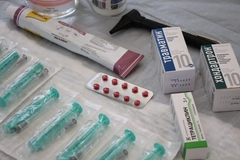
Shawpak has launched three machines for pharmaceutical packaging, tapping into industry demand for compact, flexible automation.
The machines include die-cut lid making, blister pack production, and linear form-fill-seal thermoforming, each of which caters to specific medical device requirements and the limited space within clean rooms — the controlled, sterile environment where medical devices are sealed and packaged.
In 2018, Shawpak, a UK-based manufacturer of medical device packaging machinery, aligned its packaging expertise to become innovators “solely” for the medical device industry.
“This decision has served us well in understanding the unique needs of medical device manufacturers and identifying gaps in the market to satisfy the demanding packaging challenges the medical device industry encounters,” says Tony Crofts, sales director at Shawpak.
“This has been key in our new machine development program and the introduction of unique machines such as the small footprint rotary thermoform machine, the pouch machine, and now the new platforms launching this year.”
Flexible automation
The die-cut lidding machine features lid stacking, removal of trim waste, and quick roll change capabilities. Shawpak explains that a new process uses cutting media, which is then roll-fed into the machine, increasing blade life and advanced cutting capabilities. The system can be changed to produce different-sized lids within the overall maximum area, according to the company.
In addition, other features of the die-cut lidding machine include splice detection, an extended conveyor, and a deionizer with integrated vacuum.
The linear thermoform machine focuses on larger, more complex, and higher volume pharmaceutical packaging, explains Shawpak. The machine size is “minimal,” but features various components that cater to different rigid blister applications.
Alongside this, the linear blister machine aims to replace pre-made packaging with customizable trays in-house. Shawpak says that this will reduce inventory and warehouse space.
Machinery juggles industry demand
Shawpak’s machines tap into industry demand for sleek, minimal, and efficient automation that streamlines processing times and space. Meanwhile, producers are balancing a wide range of targets, Andrea Solfa, product manager for End of Lines and Tunnels at Sidel, told Packaging Insights.
“Manufacturers are seeking greater operational capabilities through more compact, integrated solutions that reduce carbon footprints, energy consumption, and the total cost of ownership.”
Similarly, in conversation with industry players, Markem-Imaje, Multivac, Sidel, Syntegon, TNA Solutions, and UFlex, we explored how packaging machinery manufacturers are redesigning equipment to help producers tackle labor shortages, rising sustainability requirements, and increasingly complex production demands.
“Manufacturers are being asked to produce more packs, more SKUs, often from the same factory footprint and with the same, or fewer, skilled operators. At the same time, retailers, regulators, and consumers are placing greater emphasis on reducing waste and improving sustainability performance,” said Simon Hill, group product innovation manager at TNA Solutions.
In product innovation, SIG launched two new filling machines for aseptic cartons as part of its SIG Neo platform. SIG Neo XSlim 32 Aseptic is suitable for single-serve cartons and SIG Neo Midi 15 Aseptic for multi-serve offerings.