

Sulapac provides bio-based material for Yom Beauty’s lip mask packaging


Key takeaways
- Sulapac Solid has been selected for Yom Beauty’s new lip mask packaging, supporting the brand’s launch of its LipSafe product.
- The packaging combines food-grade glass with Sulapac’s fully bio-based material for the spatula and pearlescent lid.
- Sulapac says the PFAS-free material leaves no permanent microplastics behind and is manufactured in France by FaiveleyTech.
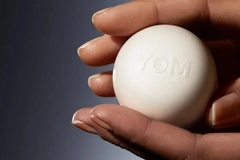
Sulapac Solid material has been selected for Yom Beauty’s new lip mask packaging, supporting the UK-based cosmetics brand’s launch of what it describes as the world’s first LipSafe lip mask made entirely with food-grade ingredients.
The microplastic-free mask is marketed as safe under the idea that what goes on the lips also goes in. “We make lip formulas with that accidental journey in mind,” says the company.
The lip mask utilizes Yom Beauty’s signature packaging concept, known as “The Pebble.” The product packaging combines food-grade glass with bio-based materials to deliver a premium solution for beauty packaging.
Katja Ahonen, international key account manager at Sulapac, tells Packaging Insights: “The spatula and the pearlescent lid of The Pebble are manufactured using Sulapac Solid, a fully bio-based material designed as a sustainable alternative to conventional plastics, supporting both environmental goals and luxury esthetics.”
Balancing aesthetics and eco-friendliness
According to Sulapac, the lip mask packaging is made from bio-based polymers and mineral fillers, providing a ceramic-like feel for users.
The solution is also said to be PFAS-free and leaves no permanent microplastics behind. The materials for Yom Beauty’s Pebble packaging are manufactured in France by FaiveleyTech, a Sulapac manufacturing partner specializing in high-value-added plastic injection molding for the health care and beauty sectors.
Recently, more beauty companies are advancing sustainability in lip product packaging. Last year, Cosmogen supplied the men’s skin care brand Horace with a post-consumer recycled PET stick for cosmetics.
Meanwhile, Quadpack invested in equipment to manufacture lip gloss dip-in bottles at its facility in Kierspe, Germany. The injection-molding equipment was said to support the company in producing monomaterial packaging from PET and PCR.
Earlier this month, Sulapac spoke to Packaging Insights about its bio-based and biodegradable extrusion material designed for the needs of cosmetic pen manufacturers.
Last year, Sulapac joined forces with Scanfill, a company that develops packaging materials, to create thermoformers across Europe that meet their customers’ increasing sustainability requirements while preserving the integrity of product quality and manufacturing performance.