


Virginia Tech's monomaterial adhesive tape outperforms duct tape while staying recyclable

Key takeaways
- Virginia Tech researchers have developed a monomaterial PSA tape where the backing and adhesive layers are chemically recyclable.
- Lipoic acid-derived polymers deliver adjustable adhesion performance while maintaining end-of-life recyclability.
- The technology could support future packaging applications, including recyclable carton tapes and residue-free adhesive labels.
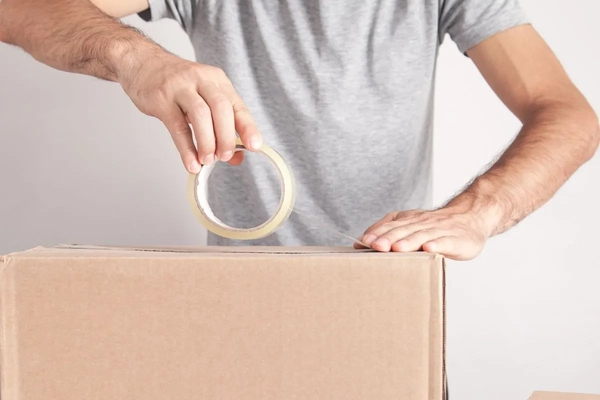
Chemists at the Virginia Polytechnic Institute and State University (Virginia Tech), US, have developed monomaterial pressure-sensitive adhesive (PSA) tapes with chemically recyclable plastic backing and an adhesive layer.
Published in Advanced Functional Materials, the study used lipoic acid — a naturally occurring sulfur-containing compound found in foods such as broccoli and spinach — to develop large adhesive polymers.
By adjusting the amount of acid, researchers identified a balance between tackiness and cohesiveness, adhesion and structural stability, producing an adhesive compound that outperforms heavy-duty duct tape in adhesion strength while maintaining chemical recyclability.
Josh Worch, corresponding author of the study and assistant professor of chemistry at Virginia Tech, tells Packaging Insights: “We would love to study these adhesives as a more sustainable tape for packaging materials, particularly for cardboard boxes. Another appealing application area would be easy-to-remove adhesive labels since label residue complicates recycling of the product they are used on, such as plastics and metal containers, among others.”
 Josh Worch, corresponding author of the study and assistant professor of chemistry at Virginia Tech.“One other application could be a biomedical adhesive since these polymers are made from lipoic acid, which is a naturally occurring biomolecule that serves as a cofactor for several classes of enzymes and possesses antioxidant effects.”
Unlock monomaterial solutions
The researchers highlight that the reversible acid-base chemistry of the carboxylic acid pendant groups, which can switch between different states, offers a convenient handle to adjust bulk properties on demand without compromising end-of-life considerations.
“While degradability at end-of-life is important for polymers and adhesives, recovery and recycling of the material should be the first option; I see degradability as a complementary feature alongside recyclability, in that we need several approaches to minimizing ecological impacts of polymers,” Worch tells us.
“The more important attribute of these adhesives is their monomaterial design, which means that each layer of the tape is made from the same family of polymers. Although the different material layers are chemically very similar, which enables them to be recycled together instead of separating them, their properties are opposing — one is plastic-like and non-adhesive, while the other is soft, rubbery, and highly adhesive.”
Worch notes that, from a performance standpoint, the solutions are already competitive with commercial adhesives. He shares that the adhesion strength can be “easily tuned by changing the ratio of the two monomers to mimic different classes of tapes.”
“The synthesis is also benign and scalable since these polymerizations use common solvents and a non-hazardous catalyst while being tolerant of air and moisture. However, there are some open questions that would need to be answered before production and deployment at a commercial scale.”
“First, we only tested the adhesion of the materials on a few surfaces; a wider survey of different surfaces would be necessary to better define their potential application areas. Additional studies would also be needed to examine the long-term stability of the material under different service conditions or environments, and if/how its adhesion changes over time,” says Worch.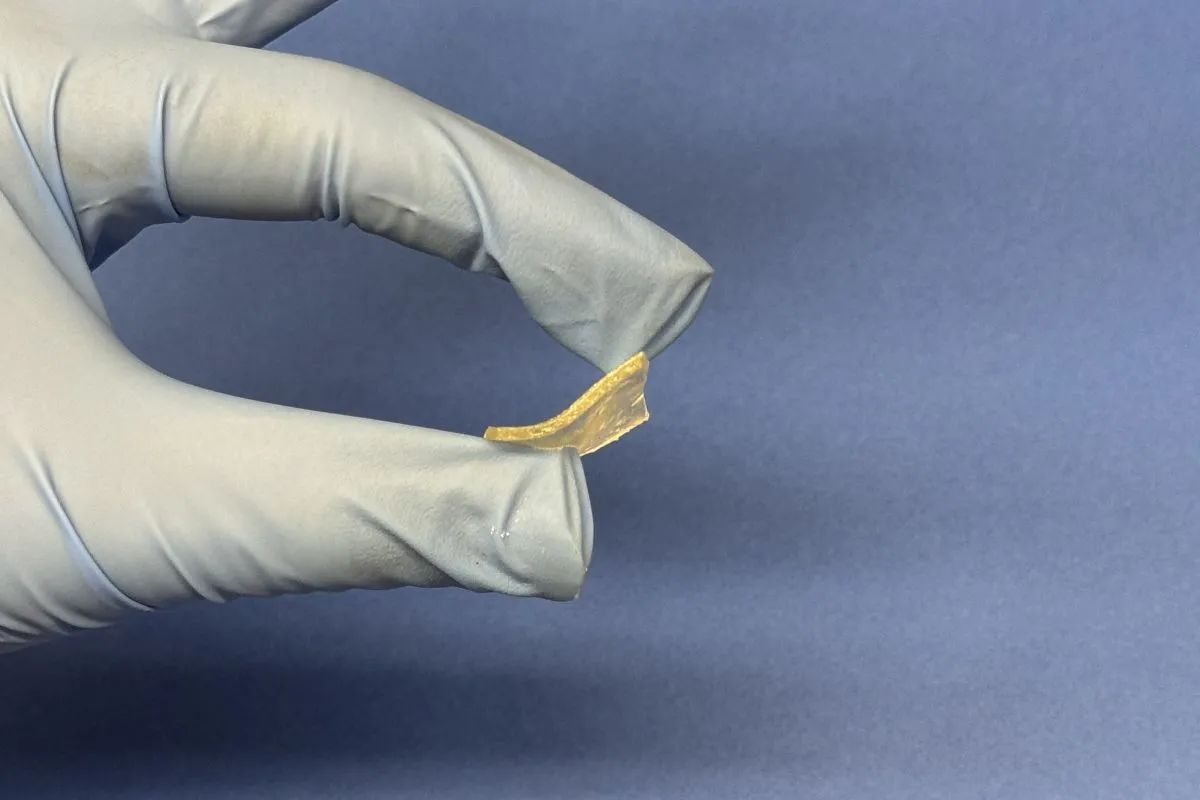 Scientists established a design strategy for PSA tapes that unites competitive performance with intrinsic chemical recyclability (Image credit: Josh Worch).
Circular-by-design
Last month, Worch and his colleagues from Virginia Tech developed a versatile and efficient methodology for synthesizing degradable bottlebrush polymers with P(Nb-alt-SO2) backbones. The study, published in Angewandte Chemie, introduced an approach that aimed to solve end-of-life disposal following their intended applications.
The researchers are looking into the possibility of combining the results of these two studies to create stronger, degradable adhesives with recyclable backing.
There is a growing interest in the industry for eco-friendly adhesive and label solutions. Previously, K-based Power Adhesives introduced Tecbond 214B, a biodegradable, hot-melt adhesive designed for cartons, corrugated packaging, point-of-sale converters, and contract packers.
Earlier this year, Henkel Adhesive Technologies collaborated with Swedish chemical company Sekab to accelerate the transition from fossil-based to bio-based raw materials in adhesive production.
Meanwhile, Sinclair supplied Copefrut, a fresh fruit producer and exporter from Chile, with its home-compostable fruit labels, which aim to cut single‑use packaging waste while maintaining the performance required by modern fresh produce supply chains.