
Indorama and Rebhan launch premium PET bottle for beauty brands

Key takeaways
- Indorama Ventures and Rebhan have commercialized a thick-walled PET bottle combining glass-like clarity with lightweight properties.
- The bottle is available globally using virgin PET, chemically recycled content, or mass-balanced certified feedstock.
- The launch reflects growing demand for premium personal care packaging that balances visual appeal, performance, and material choice.
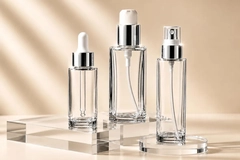 (Image credit: Indorama Ventures)
Indorama Ventures has equipped cosmetic packager Rebhan with a new generation of PET bottles for beauty and personal care products.
The LuxyClear EBM PET 5508 is designed for extrusion blow molding with thick walls for transparency. It aims to combine a glass-like premium appearance with PET’s lightweight, durable, and shatterproof benefits.
“Beauty brands should not have to choose between premium design, packaging performance, and greater material choice,” says Dr. Patrick Amrhein, business director of Specialty Polymers at Indorama Ventures.
“By combining LuxyClear EBM PET 5508 with Rebhan’s design and manufacturing expertise, we are giving brands a commercially practical route to create distinctive packaging.”
The bottle is commercially available to beauty and personal care brands across Europe, Asia, North America, and Latin America.
In the personal care packaging space, “ethical aesthetics” are increasingly important to foster consumer trust and enhance brand communication. In 2024, Innova Market Insights data indicated that 78% of Gen Z and Millennials consider packaging an important factor when buying makeup, including its environmental performance.
Meanwhile, at COSME Week Tokyo 2025, Yumi Saito, sales manager at MYC Packaging Group in China, told Packaging Insights: “Particularly in Japanese and other Asian markets, the demand for makeup from women is very high. In Asia, there is a greater emphasis on dopamine color palettes in packaging design, which are more visually appealing.”
Recent product launches that have tapped into demand for aesthetics and premiumness have included Bormioli Luigi’s expanded range of fragrance glass bottles featuring two mini formats for on-the-go consumer habits and Aesop’s redesigned fragrance bottle that maintains the brand’s minimalist aesthetics but aims to “exist harmoniously within retail spaces.”
Sustainable design
As the consumer demand for “ethical aesthetics” grows, brands are incorporating different forms of recycled content into personal care packaging. Indorama highlights that the personal care bottle is available using virgin PET feedstock, chemically recycled content, or mass-balanced certified feedstock.
“These options allow brands to reduce reliance on virgin fossil resources while maintaining the same premium clarity, performance, and product quality,” says the global chemical manufacturer.
Another recent example is Norner’s liquid-soap bottle made using locally sourced post-consumer recycled content from discarded high-density PE pipes used by the fish-farming industry.
Increasingly, chemically recycled content and the mass balance approach are being viewed as one method to effectively recycle plastic packaging. However, environmental critics have pointed to the process’s pollution emission, as well as raised concerns over the fairness of the mass balance approach.
“Chemical recycling is energy-intensive and often results in hazardous waste, toxic emissions, and GHGs,” Weyinmi Okotie, program manager for Clean Air at Global Alliance for Incinerator Alternatives, told Packaging Insights.
Marc van den Biggelaar, global product director for Circular and Renewable Solutions at Dow Packaging and Specialty Plastics, explained that recognition of advanced recycling and mass balance approaches could help unlock investment and scale the technology.