

Dessert packaging prioritizes freshness with resealable, recyclable formats

Key takeaways
- Dessert and sweet snack packaging is evolving to balance product protection with circularity.
- Consumer demand is shifting toward resealable, convenient formats for dessert packaging.
- Suppliers such as Constantia Flexibles and Südpack are developing solutions that can meet evolving consumer and regulatory needs.
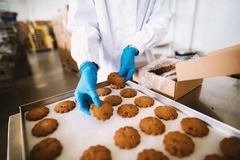
The sweet snack and dessert packaging sector is advancing to achieve a dual mandate. Businesses are looking into solutions that provide a circular economy profile while protecting food textures, like the precise crunch of a biscuit or the moisture of a baked sweet snack.
Packaging Insights speaks to Constantia Flexibles and Südpack, with data from Innova Market Insights about how regulatory updates and shifting consumer expectations are pushing dessert brands to rethink their delivery format.
“Packaging has to communicate freshness, crunch, taste protection, secure sealing, and easy handling. For desserts and baked sweet snacks, where texture and sensory quality are key purchase drivers, the promise of long-lasting freshness is important,” Holger Hoss, head of Strategic Product Management at Südpack, tells us.
“The most convincing packaging concepts are therefore those that bring the two dimensions together: attractive, convenient, and protective packaging with a clearly demonstrable contribution to recyclability and circularity.”
Catering to on-the-go consumers
Consumer habits are evolving past the single-sitting consumption model. According to global consumer data from Innova Market Insights spanning April 2021 to March 2026, 45% of consumers globally now state a preference for resealable dessert packaging when purchasing desserts.
Grazyna Polak, VP for Sustainability Film and head of Strategic Market Product Management Confectionery, Snacks, Dairy, and HPC at Constantia Flexibles, says: “Portion control and freshness after opening are becoming increasingly important, especially for cookies, confectionery, and sharing packs.”
“Convenience remains essential: consumers expect packaging that is easy to open, easy to handle, and suitable for on-the-go as well as at-home consumption.”
In response to this trend, Constantia Flexibles is focusing on developing packaging concepts that maintain the barrier performance and machinability needed for sensitive products while adding consumer-relevant features such as easy opening, resealability, and formats that support portion control, according to Polak.
Hoss identifies a similar trend for convenience: “In segments such as baked sweet snacks, confectionery, and dried fruit products, which are key ingredients for a variety of desserts, packaging has to preserve taste, texture, and freshness while also supporting modern consumption habits such as on-the-go snacking, portion control, and reclosability.”
Hoss shares that Südpack offers a portfolio of packaging solutions that can be tailored precisely to the specific requirements of baked sweet snacks.
“These products are often sensitive to oxygen, moisture, UV light, or mechanical stress, so the packaging has to provide dependable protection while remaining attractive and easy to handle,” he adds.
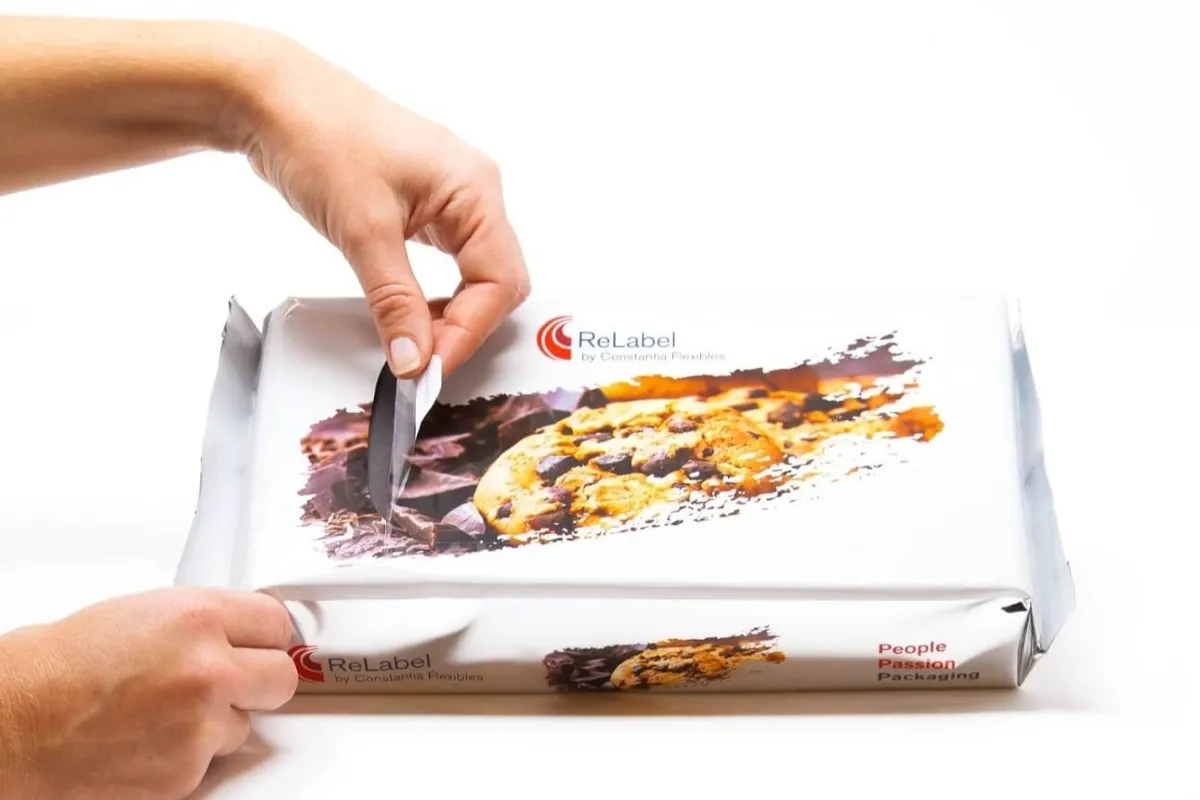 Constantia Flexibles is working with brands that are seeking to meet recyclability requirements from the earliest stages of packaging design (Image credit: Constantia Flexibles).“Depending on the application, our film structures can be equipped with the required oxygen and water vapor barriers, high-opacity pigmentation, or sealing properties to help maintain freshness, flavor, color, and texture throughout the product’s shelf life.”
Protecting the crunch
Polak points out that brands are looking for packaging that protects product quality while using materials efficiently.
“ReLabel is designed for the moment after first opening, which is often where conventional packaging falls short. It is Constantia Flexibles’ pressure-sensitive easy opening and reseal solution, applicable to stand-up pouches, pouches, bags, and multipacks.”
“For cookies and sweet snacks, consumers want easy access but also want the product to stay crisp and enjoyable over several snacking occasions.”
Polak says that currently, there is a strong demand for crispy, sweet products. “For crispy products, maintaining crispiness throughout shelf life is a key priority. This requires maximizing the water vapor transmission rate barrier performance of the packaging, which can be challenging while also meeting other packaging requirements.”
“ReLabel allows packs to be opened intuitively and reclosed securely, helping to protect freshness, texture, and aroma while supporting more mindful portioning. For brands, it offers a practical way to add convenience and a more premium user experience without requiring machine investments,” she continues.
“Depending on the application, tamper-evident features and high oxygen barrier materials are also available, supporting consumer confidence and product protection.”
Supporting environmental claims
Data from Innova Market Insights also highlights that the sustainability narrative is dominating the global dessert packaging industry. Between April 2025 and March 2026, “recyclable” emerged as the leading environmental claim, capturing 44% of all surveyed claims.
Concurrently, alternative sustainable routes are gaining traction. Innova Market Insights data shows a 17% CAGR in compostable claims for dessert packaging over the last five years.
“Sustainability is moving from a broad marketing promise to a concrete packaging requirement. Recyclable monomaterial structures, lower material consumption, aluminum-free concepts, and compliance with upcoming regulatory frameworks such as the EU Packaging and Packaging Waste Regulation are becoming increasingly important,” says Hoss.
“For dessert and sweet snacks, this means that packaging must not only look attractive and perform well on the packaging line, but also contribute to a functioning circular economy without compromising product quality.”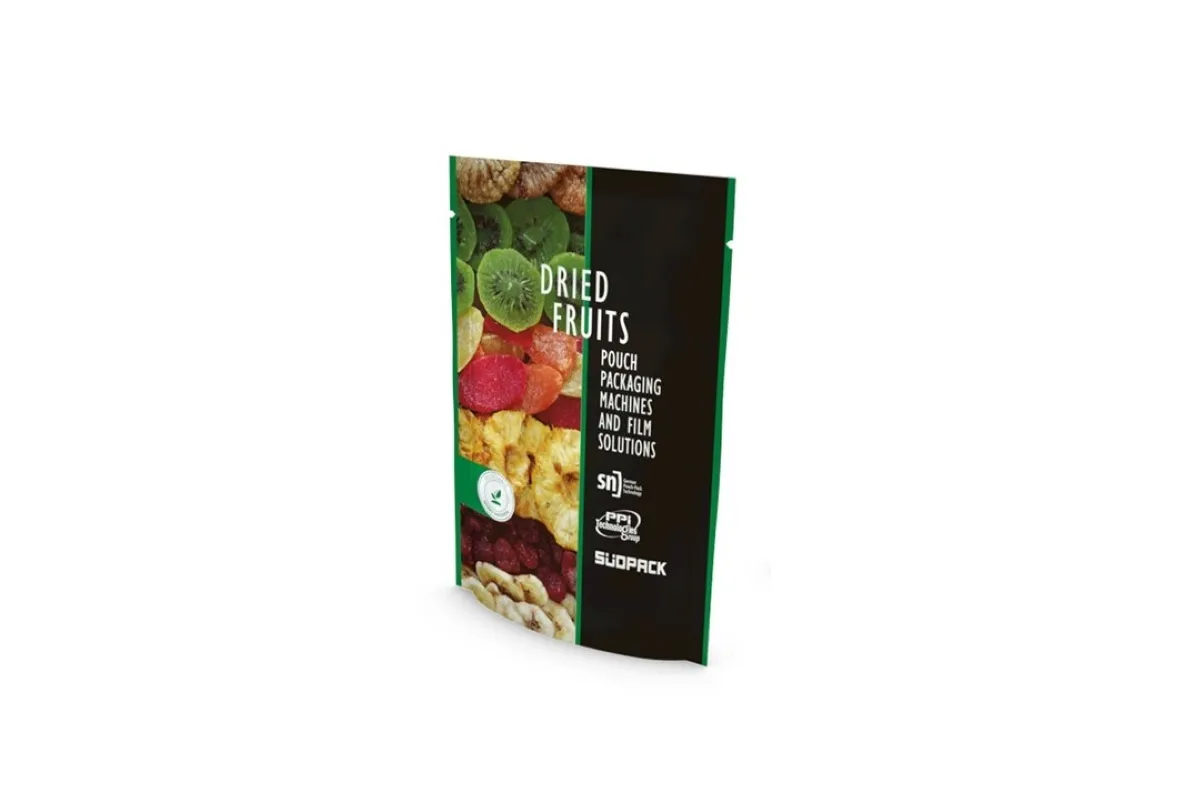 Südpack’s innovation aims to meet the growing demand for reliable product protection and high consumer convenience (Image credit: Südpack).
Hoss furthers that some of the strongest claims driving interest in the space of sweet snack packaging are linked to recyclability, reduced environmental impact, and product safety.
“In the sweet snack segment, consumers increasingly expect packaging that supports a more mindful lifestyle — not only through the product itself, but also through the packaging concept,” he continues.
“Claims such as recyclable, aluminum-free, monomaterial, resource-saving, or designed for recycling, which generally all result in a lower carbon footprint, therefore, play an important role, especially when they can be substantiated by certified recycling rates or life cycle assessments.”
Advancing flexible solutions
Constantia Flexibles aims to respond to market trends with flexible packaging, combining strong barrier performance, consumer-friendly functionality, and material structures developed with regulatory requirements and local collection, sorting, and recycling realities in mind.
“Innovation in dessert and sweet snack packaging is increasingly about bringing multiple requirements together in one solution: product protection, intuitive functionality, material efficiency, and recyclability considerations,” says Polak.
“We are advancing material structures that are designed with recycling requirements in mind, while recognizing that the right solution depends on the product, shelf life targets, filling process, and the recycling infrastructure available in each market.”
“That is why we work closely with customers to develop packaging concepts that are technically robust and relevant to evolving consumer and regulatory expectations.”
Hoss highlights that Südpack is also engineering flexible pouch and flowpack applications.
“Our recyclable CarbonLite monomaterial solutions based on PP or PE offer an eco-friendly alternative to conventional non-recyclable composites or aluminum-based structures. They can be converted into lightweight flowpacks, practical doypacks, or robust block-bottom pouches and are designed to run smoothly on standard packaging machines.”
“For reclosable concepts, zippers are available in PP and PE versions, enabling monomaterial packaging concepts right through to end-of-life recycling. In addition, Südpack’s SPQ printing technology supports high-quality, brilliant print images with reduced ink and solvent consumption, helping brands combine visual differentiation with a more sustainable packaging approach.”