



Ball Corporation advances substantiated sustainability in aluminum packaging

Key takeaways
- Ball Corporation emphasizes substantiated sustainability, focusing on measurable, verifiable claims and transparency to combat greenwashing.
- Aluminum packaging offers inherent circularity advantages, including high recycled content, lightweight designs, and energy-efficient solutions.
- Regulatory trends like EU PPWR and EPR policies drive proof-based sustainability, requiring traceable, auditable, and verifiable packaging claims.
 All image credits: Ball Corporation.
As environmental sustainability moves from being a standout packaging claim to a requirement driven by regulations and consumer expectations, the ability of companies to communicate the evidence is becoming increasingly important.
While the topic of substantiated sustainability is usually discussed in conversations about plastics and paper packaging, it is just as important for other packaging materials, including aluminum.
Substantiated sustainability is an Innova Market Insights Top Packaging Trend for 2026, and it will be discussed at the upcoming Packaging Insights webinar on June 11, highlighting how brands can address these trends to thrive in the market.
We sit down with Predrag Ozmo, sustainability director at Ball Corporation, to discuss the major aluminum manufacturer’s sustainability credentials and communication strategy.
Ozmo tells us: “We combat greenwashing by prioritizing action over rhetoric and proof over promises. Every sustainability claim we make must be specific, measurable, and supported by verifiable data, ideally aligned with recognized standards and third‑party validation.”
“We deliberately avoid vague or absolute language and instead focus on quantified impacts, clearly defined baselines, and transparent methodologies, as detailed in our Climate Transition Plan and annual Combined Reports.”
For brands looking to avoid greenwashing, he advises: “Start with realism and discipline: set credible, science‑based targets, be clear about what is achievable today versus what is still in development, and communicate progress, both successes and challenges, openly.”
Verifying claims
Transparency, consistency, and data integrity are more powerful when communicating sustainability than bold claims, asserts Ozmo. “They are essential for maintaining long‑term trust with consumers, customers, and regulators alike.”
.webp) Predrag Ozmo, sustainability director at Ball Corporation.He says that the most challenging claims to substantiate are definitive or absolute statements that lack a quantifiable basis. Ball’s guiding principle is that if a claim is difficult to prove with clear evidence, it shouldn’t be made.
Predrag Ozmo, sustainability director at Ball Corporation.He says that the most challenging claims to substantiate are definitive or absolute statements that lack a quantifiable basis. Ball’s guiding principle is that if a claim is difficult to prove with clear evidence, it shouldn’t be made.
“A prime example is the phrase ‘infinitely recyclable.’ While commonly used in the industry, ‘infinitely’ is not a concept that can be quantified or proven. To ensure our messaging is precise and clear, alternative wording such as ‘aluminum recycles again and again’ or ‘aluminum is a truly circular material’ is what we opt for.”
“This commitment to factual accuracy extends to all our claims. We only make statements that are explainable and backed by evidence, ensuring we remain a trusted voice on sustainability.”
Ball is the first can manufacturer to have all plants globally certified by the Aluminium Stewardship Initiative standard for responsible aluminum sourcing. The company aims to reduce emissions by 55% by 2030, a goal validated by the Science Based Targets initiative, confirming alignment with a 1.5 degrees Celsius climate pathway.
It has also received ISO certifications for environmental and safety management across 93% of its plants and a top-tier AAA ESG rating from Morgan Stanley Capital International, and consistently strong performance through the Carbon Disclosure Project.
Ozmo says Ball advocates for increased transparency by publishing a detailed Climate Transition Plan and annual Combined Reports to provide comprehensive data and track progress against publicly stated goals.
Aluminum advantage
Ozmo argues that Ball’s sustainability credentials are supported by the inherent properties of aluminum, which he describes as having a structural advantage over many other packaging materials.
“A prime recent example is our award‑winning aerosol can developed with Alcoa and Unilever, which enabled the first use of the Elysis carbon‑free smelting technology in personal and home care packaging.”
“By combining 50% Elysis primary aluminum with 50% post‑consumer recycled content, the can delivers a significantly lower carbon footprint than conventional alternatives and sets a new benchmark for sustainable personal care packaging.”
Aluminum may enable more circular and material‑efficient solutions in markets traditionally dominated by other materials. Ozmo points to Ball’s ReAl alloy lightweight portfolio for quality performance and recycled content levels of up to 100%.
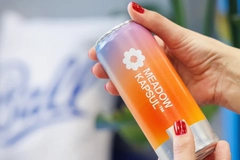
 Ball's Meadow Kapsul refill system provides aluminum blanks for pre‑fillable cartridges in reusable dispensers.“In parallel, our collaboration with Natulim, the first company on the Iberian Peninsula to adopt the Meadow Kapsul refill system, demonstrates how aluminum blanks can be transformed into pre‑filled cartridges for durable, reusable dispensers, significantly reducing material use, energy demand, and transport impacts.”
We recently discussed the company’s latest aluminum packaging solutions, including reusables, with Victoria Marletta, commercial vice president for aerosol packaging at Ball Corporation. She emphasized that aluminum packaging for personal and home care is well suited to meeting upcoming regulatory requirements.
Regulatory push
Regulations are driving innovation for improved environmental credentials across the entire packaging value chain, and aluminum producers are not an exception. Ozmo says the EU’s Packaging and Packaging Waste Regulation (PPWR) will require producers to provide concrete proof of their packaging’s sustainability, shifting “the burden” of proof directly onto them.
“The PPWR mandates that all packaging must meet strict Design for Recycling criteria. At the same time, most member states will have implemented deposit return schemes for beverage cans and PET bottles by 2029.”
“Additionally, evolving EPR policies will link producer fees to the end-of-life costs of their packaging. To lower these ‘polluter pays’ fees, companies must provide clear proof of their packaging’s recyclability and material value. This creates a powerful financial incentive for high-value, easily recyclable materials like aluminum.”
Beyond material choice, regulators will also expect robust data, traceability, and auditability, Ozmo argues. He adds that sustainability claims will need to be supported by harmonized methodologies, verified recycled content, and transparent reporting across the value chain.
“This shift leaves little room for unsupported marketing claims and reinforces the need for credible data systems, third‑party verification, and full alignment between product design, reporting, and real‑world outcomes.”