

Thailand ramps up plastic recycling amid petrochemical disruptions


Key takeaways
- Thailand plans to increase plastic recycling to counter petrochemical supply disruptions caused by the US-Iran conflict.
- The government is planning to promote recycled plastics and bio-based materials through cross-ministry collaboration.
- Experts warn that, without mandatory circular economy laws, eco-design requirements, and stronger consumer behavior changes, the policy will have limited impact.
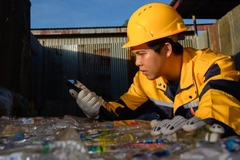
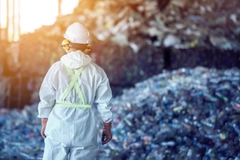
Thailand has announced measures to accelerate plastic recycling as the US-Iran war interrupts the flow of petrochemical feedstocks. The initiative aims to ease immediate supply pressures and strengthen long-term environmental protection.
Thailand’s Industry minister Varawut Silpa-archa notes that fluctuations in plastic resin prices influence the cost of packaging products and directly impact consumers.
He expects that producing recycled plastic pellets domestically could offset increasing costs and shortages in the global market.
The Thailand Industry Ministry has also engaged with the Commerce Ministry, the Ministry of Natural Resources and Environment, and the Ministry of Public Health, with plans to upgrade recycling technology and create stronger market demand for recycled materials.
However, environmental management professionals argue that without introducing a new law and changing consumer behavior, the policy is unlikely to have an impact on plastic packaging waste.
Patarapol Tularak, secretary general for the Solid Waste Management Association Thailand, tells Packaging Insights: “The Thai government is mainly concerned about the economic hardship of industries and consumers, not plastic waste or any environmental problems.”
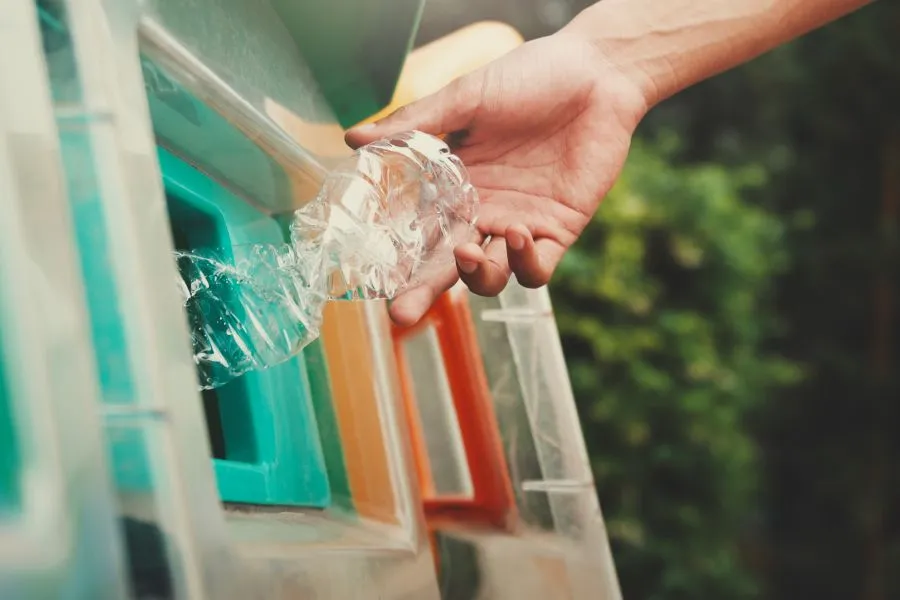 The minister urges the public to support the initiative by feeding plastic into recycling systems.“With the supply chain disruption, the minister of Industry took the lead in announcing a policy to promote bio-based plastics and increase recycled content, and asking people to carry their own tumbler without any specific or detailed plan on how to achieve these.”
Calls for EPR framework
Tularak highlights that mandatory circular economy legislation with the focus on reduce, refill, repair, and reuse is needed to prevent plastic waste generation.
“Plastic packaging EPR laws can be a part of the circular economy law, or it can be enacted standalone. But the EPR law may emphasize waste collection and recycling rather than reducing and reusing. The key measures should include mandatory ban, mandatory eco-design of products and packages to ensure that they can be commercially recycled when they become waste,” he says.
“It has been observed in many cases around Thailand that when citizens are already active in waste segregation, the majority of plastic packaging materials cannot be recycled technically or commercially. For instance, most multi-layer, flexible packaging, and PET cups are not yet recyclable in Thailand.”
Recently, Thai material innovation and recycling company Rewastec told Packaging Insights that the country is preparing to meet the EU Packaging and Packaging Waste Regulation, as global packaging standards are directly influencing Thai packaging suppliers and converters.
Southeast Asian countries are shifting toward mandatory EPR frameworks for packaging. However, Tularak says that, in Thailand, the majority of industries and importers are not well aware of EPR.
“The Pollution Control Department at the Ministry of Natural Resources and Environment is trying hard to push the packaging EPR law together with a unit of the Federation of Thai Industry, with support from the German and Danish governments.”