

Envases taps Tata Steel Carbon Lite to cut packaging Scope 3 emissions

Key takeaways
- Envases is offering Tata Steel’s Carbon Lite steel to help packaging customers reduce the CO2 footprint associated with steel packaging.
- Tata Steel says verified emissions reductions allocated through the mass balance system can cut the steel’s associated CO2 emission intensity by up to 85%.
- The partnership targets Scope 3 emissions by linking packaging customers with upstream steel decarbonization projects.
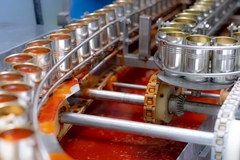
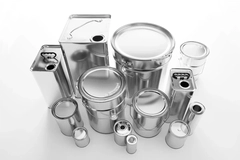 (Image credit: Envases).
Tata Steel Netherlands has equipped Envases, a global metal packaging manufacturer, with its reduced Carbon Lite steel offering for packaging.
While Tata Steel’s Carbon Lite is not a new steel grade, it now includes a mass-balanced offering that is said to enable brands to lower the CO2 footprint associated with steel packaging.
“With Carbon Lite, the CO2 emission intensity of the steel associated with the packaging can be reduced by a maximum of 85%. For fillers and brands that pack a lot in steel cans, the impact can be substantial,” Marnix Böggemann, marketing manager for Packaging at Tata Steel, tells Packaging Insights.
However, he adds that carbon reductions largely depend on the share of steel in individual company processes and products.
Through the collaboration, Envases and Tata Steel aim to provide a “practical and credible” pathway for companies to reduce Scope 3 GHG emissions — the indirect emissions that occur across a company’s value chain.
Mass balance accounting
Mass balance accounting is one method to track the amount of CO2 emissions associated with packaging. Companies record how much CO2 goes into the overall production system and assign that amount to certain finished products.
“Under the mass-balance approach, verified emissions reductions are allocated to specific steel volumes through a certified accounting framework, while the physical material characteristics [of the steel] remain unchanged,” says Envases.
The packaging industry is also increasingly using the approach in recycled plastic content assessments. However, environmental groups have warned that it could lead to “unsubstantiated claims” of the amount of recycled content in packaging products.
Last month, Dow and Amcor partnered on the Carbon Footprint Ledger (CFL) methodology to help packaging companies reduce Scope 3 GHG emissions. The CFL is based on existing industry mass balance approaches in GHG accounting.
Sustainable steelmaking
Tata Steel’s Green Steel Project aims to incorporate more sustainable steelmaking technologies at its site in IJmuiden, the Netherlands, to achieve net-zero steel production by 2045.
Böggemann explains: “The revenues from Carbon Lite sales are used by Tata Steel to accelerate further decarbonization projects, which in turn (once verified) enables us to offer more Carbon Lite steel.”
Last year, the Dutch government signed a non-binding agreement under which it would invest €2 billion (US$2.4 billion) in Tata Steel to improve the environmental sustainability of the steel giant’s IJmuiden facility by reducing CO2 emissions, reducing health risks, and addressing quality of life concerns for local residents.
Since then, Tata Steel has come under fire from the Dutch Public Prosecution Service, which alleges that the steelmaker allowed “undercooked coke to occur” at its facility. Coke is made by heating coal at very high temperatures with little or no oxygen, but if the process is unfinished, it can lead to higher releases of pollutants and gases.
Value chain collaboration
According to the companies, the partnership highlights the importance of close value chain collaboration “to progress GHG-emission reductions.”
“Through these collaborations, companies further down the packaging value chain can actively contribute to upstream supply chain decarbonization,” says Böggemann.
“By embracing an insetting approach, such as Carbon Lite, they can take meaningful responsibility for their Scope 3 emissions by supporting emission reductions where they occur within their own value chain.”
Steel is also the most recycled material in the world, says Envases, adding that it can be recycled without loss of quality. Earlier this year, Henkel introduced a low-carbon tinplate can packaging for adhesive solutions that offers a 62% reduction in CO2 emissions compared to conventional tin cans.