


Südpack expands recyclable PP spouted pouches into drinkable yogurt market

Key takeaways
- Südpack has expanded its CarbonLite PurePP monomaterial spouted pouch range for cold-filled drinkable yogurt and other dairy beverages.
- The company says the pouches deliver comparable shelf life to conventional PET, aluminum, and PE laminates.
- Designed for PP recycling streams, the pouches reportedly achieve more than 95% recyclability and a carbon footprint reduction of over 40%.
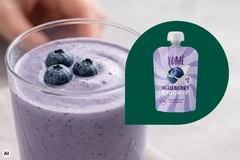 (Image credit: Südpack).
Südpack has broadened the application range of its monomaterial spouted pouches made from its CarbonLite PurePP material. The pouches are now suitable for drinkable yogurt and similar dairy products.
The German packaging provider describes CarbonLite PurePP as offering product safety through its sealing performance and secure spout integration, said to facilitate sealing strength and lasting leak-tightness under real-world conditions.
In order to guarantee the pouches are suitable for cold-filled drinkable yogurt, Südpack drew on its experience working with machine and spout manufacturers on fruit purée filling applications.
The company highlights the PP laminate’s machinability, the ease with which a material can be shaped, on standard production machines, including at high cycle rates.
“The high-performance films for spouted pouches were developed for the cold filling of drinkable yogurt and other dairy products using packaging materials that require ultraviolet-C light or hydrogen peroxide treatment to reduce the microbial load,” Südpack explains.
“The films can be tailored to provide the required barriers against oxygen and water vapor and, according to internal testing, offer the same shelf life as the PET, aluminum, and PE laminates commonly used to date.”
Spouted pouches can also give manufacturers of drinkable yogurt, drinkable skyr, and similar products an edge at the point of sale, Südpack continues. They are said to provide strong shelf appeal that can help brands stand out on the refrigerated aisle.
“With a market share exceeding 44%, rigid formats such as PET bottles and cups remain the predominant packaging choice. Flexible pouches, however, are the fastest-growing alternative format, with forecast growth of 8%,” the company says, highlighting the increasing relevance of PP pouches for on-the-go yogurt applications.
“Spouted pouches combine a lightweight format with everyday convenience. For on-the-go products in particular, packaging needs to be easy to open, securely reclosable, and designed for clean, mess-free consumption.”
Designed for recyclability
Südpack notes that its drinkable yogurt packaging is designed to be recycling-friendly, as the pouch and PP spout can both be recycled within certain PP recycling streams.
The design is in line with the requirements of the EU’s Packaging and Packaging Waste Regulation, offering a recyclability rate of more than 95%, according to the provider.
The company aims to help brand owners adapt their packaging portfolios to meet design for recycling requirements, including through recyclability and material efficiency.
Südpack’s calculations reveal that its monomaterial pouches, with a film thickness of 111 μm, have a CO2 footprint per square meter that is more than 40% lower than that of a 103 μm PET, aluminum, and PE laminate. The calculations are based on raw materials and production alone, the company adds.
Additionally, conventional laminates cannot generally be mechanically recycled in the same way as a monomaterial PP packaging, the company points out.
Packaging Insights discussed Südpack’s flexible solutions for the dessert space, including on-the-go packaging, in a recent report. The company spotlighted the importance of attractive, convenient, and protective packaging that also contributes to circularity through recyclability.
The company’s recent launches include a bio-based, biodegradable polylactic acid film solution for potted plants and two packaging films for sensitive foods, like fish and seafood.
In July, Südpack Medica opened its expanded plant in Coulmer, France.