

Greendot Biopak receives home compostable patent for stretch film


Key takeaways
- Greendot Biopak has patented a home compostable, bio-based stretch film to replace LLDPE films used in logistics, warehousing, and FMCG packaging.
- The company says the film achieves 300–350% elongation, natural cling, and up to 55% cost savings per meter compared to conventional films.
- The solution is certified home compostable, complies with major international standards and is positioned to support EPR requirements.
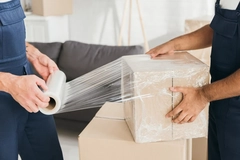
Greendot Biopak has secured a patent for its certified home compostable and bio-based stretch film, aiming to replace conventional plastic-based films used in logistics, warehousing, and FMCG packaging.
The material science company based in Ahmedabad, Gujarat, India, highlights that stretch films are key to securing pallets and bundling goods in warehouses and during transportation.
The global stretch film market is valued at over US$10.2 billion and is heavily reliant on linear low-density PE (LLDPE), Greendot Biopak points out.
The company notes that replacing LLDPE has been difficult, with alternatives failing to deliver the industry-required 300–400% elongation, puncture resistance, and cling without relying on polyisobutylene, a petroleum-derived synthetic tackifier that, according to the company, means the films are not “genuinely” compostable.

Greendot Biopak says its patented Stretch Film technology recently achieved the required natural cling without using artificial gum or synthetic tackifier. It is described as entirely free of PE and food safe, and matching conventional LLDPE performance. The material is said to break down completely into “nutrient-rich” humus within certified timeframes.
“For decades, the industry’s excuse to delay action has been that a sustainable stretch film couldn’t handle the extreme physical demands of the global supply chain,” says Rajen Bhagyodaya, founder at Greendot Biopak.
“We refused to accept that. We spent years engineering a film that delivers the load retention, optical clarity, and extreme elongation that heavy industries demand, but returns safely to the earth. A performance-grade, certified compostable stretch film exists today, and it is ready for global scale.”
Economic and performance metrics
Greendot Biopak says its film achieves a stretch ratio of 3 to 3.5 times (300-350% elongation), exceeding conventional LLDPE’s 1.5 times or 50–75% stretch limit. The higher elongation enables improved coverage with less product usage, the company adds.
The company also notes that, in comparison to conventional 55-micron plastic film, Greendot Biopak’s solution delivers a 55% cost saving per meter of coverage, alongside a 59.5% reduction in carbon emissions (saving 2.85 kg of CO per kg of film).
Transitioning to the bio-based film does not require capital expenditure as it acts as a direct, drop-in replacement, the company continues. It is said to perform well on manual hand-wrap operations and existing high-speed automated machinery across cold chain and ambient environments.
Regulatory compliance
Greendot Biopak describes its film as targeting the EU’s Packaging and Packaging Waste Regulation mandate for recyclable or compostable packaging adoption by 2030, and India’s EPR framework, which sets financial obligations for plastic and packaging producers.
“Policy makers and brands no longer have to risk mandating what the market cannot supply,” argues Bhagyodaya. “Since its introduction years ago, stretch film has undergone significant advancements, resulting in higher quality and improved performance.”
“We are inviting regulatory bodies, converters, and global brands to look at our home compostable stretch film. You can meet your Scope 3 emissions targets and EPR compliance without disrupting a single day of your warehouse operations.”
Greendot Biopak says its home compostable stretch film holds DIN CERTCO Home Compostable certification and complies with US Food and Drug Administration food-contact standards. It is also said to meet the European EN 13432 and Indian IS/ISO 17088, the Central Pollution Control Board regulatory frameworks.
The company is rolling out a product range across the F&B, e-commerce, agriculture, and industrial manufacturing categories, and moving to establish a new premium product category.
In other recent compostable packaging developments, Sinclair equipped Copefrut with home degradable fruit labels in Chile, and Sway and BPI partnered to support building a compostable certification framework.
Researchers at Virginia Tech, US, developed a water-based process to create multilayer bioplastic films described as high-performing and compostable.