

Incentives drive consumers toward reusable foodservice packaging, study finds


Key takeaways
- A university cafeteria reward scheme has increased packaging-free salad purchases from 11.5% to 41% of weekly sales.
- Consumers were over five times more likely to choose reusable dishware or containers during the intervention.
- Researchers say convenience, visibility, and infrastructure are essential, while longer studies must assess whether behavior persists.

A recent study has found that positive, incentive-based interventions are associated with a rise in food purchases in reusable packaging, initially observed in a university cafeteria setting.
Researchers from Matej Bel University, Slovakia, compared salad purchases before and during a loyalty-style reward that offered consumers every fifth salad free when they used reusable cafeteria dishware or brought in their own reusable container instead of using disposable packaging.
The study, published in Food and Humanity, found that packaging-free purchases rose from 11.5% to 41% of weekly salad sales, and consumers were more than five times as likely to choose the packaging-free option during the loyalty scheme, while salad sales remained stable.

Packaging Insights speaks to corresponding authors, Nikoleta Jakuš Muthová and Maria Murray Svidroňová from the Faculty of Economics at Matej Bel University, Slovakia, to understand more about the research.
“The immediate behavioral shift after the intervention was introduced suggests that the salience of the campaign, and the perceived attractiveness of progressing toward a reward, were particularly important [in informing consumer behavior],” says Muthová.
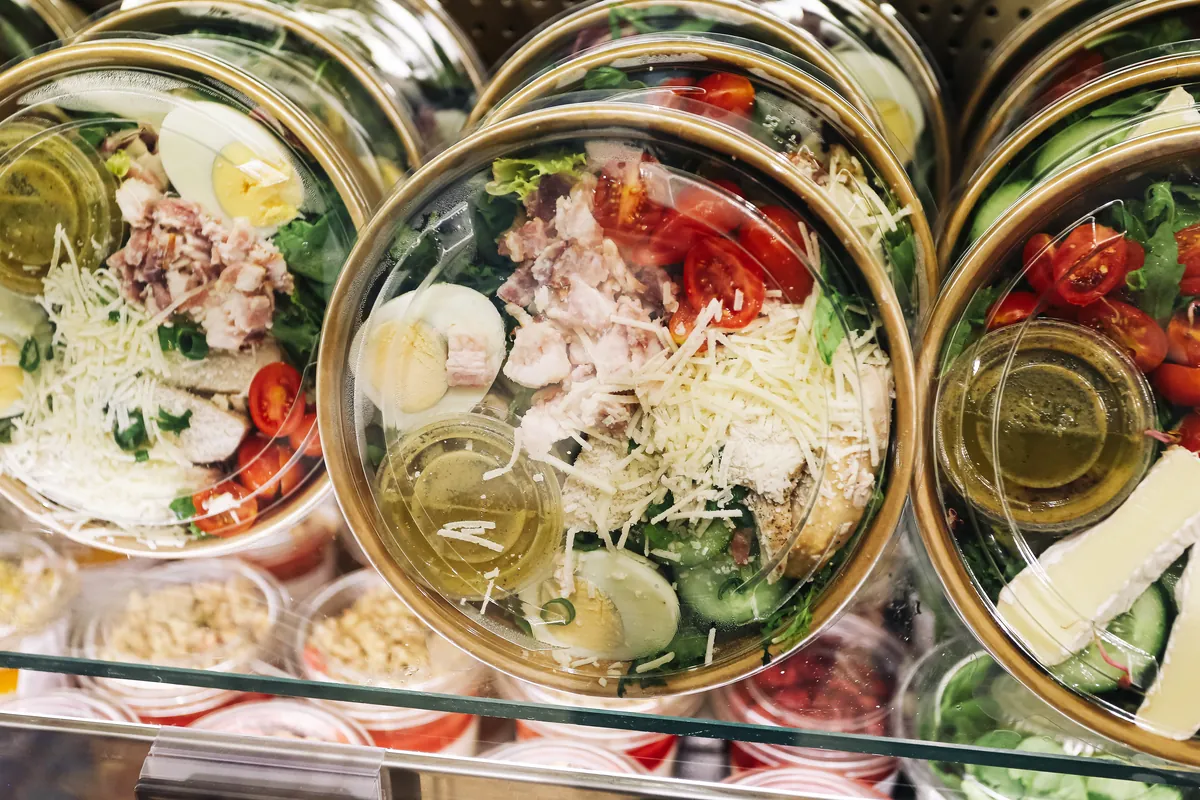 The loyalty scheme increased packaging-free salad purchases from 11.5% to 41% of weekly sales.However, the researchers stress that they cannot say that an entirely new consumer habit was formed, as this would require observing behavior after the incentive was removed.
The study reflects a growing shift in the packaging industry to reuse systems. These systems, once deployed, can be effective in reducing single-use packaging options, but they can be hampered by slow consumer behavior change.
Centralizing consumer convenience
The research argues that in institutional foodservice environments, disposable packaging has “become the default option,” which can reinforce “preferences for single-use formats and limiting consumer engagement with reusable alternatives.”
“The key barrier is convenience,” underscores Svidroňová. “Sustainable choices are unlikely to scale if they require more effort from consumers. Packaging-free options need to be easy, visible, and practical, including for takeaway.”
In the experiment, salad sales remained “broadly stable,” indicating that the loyalty scheme changed packaging choices rather than increasing salad demand.
According to the research, the cafeteria avoided using 551 plastic containers, the equivalent of an estimated 9.37 kg of plastic. However, during the experiment, 59% of salads were still sold in disposable packaging.
“This suggests that the intervention reduced, but did not eliminate, reliance on packaged options. Convenience, takeaway needs, hygiene perceptions, and established routines may have continued to support the use of packaged salads,” outlines the study.
Developing reuse incentives
The researchers note that the experiment needs further refining, highlighting that it examined only one cafeteria, compared different periods of the academic year, had no control group, and did not assess costs or whether behaviors persisted after the incentive ended.
However, they suggest that the study could have implications for the wider packaging sector.
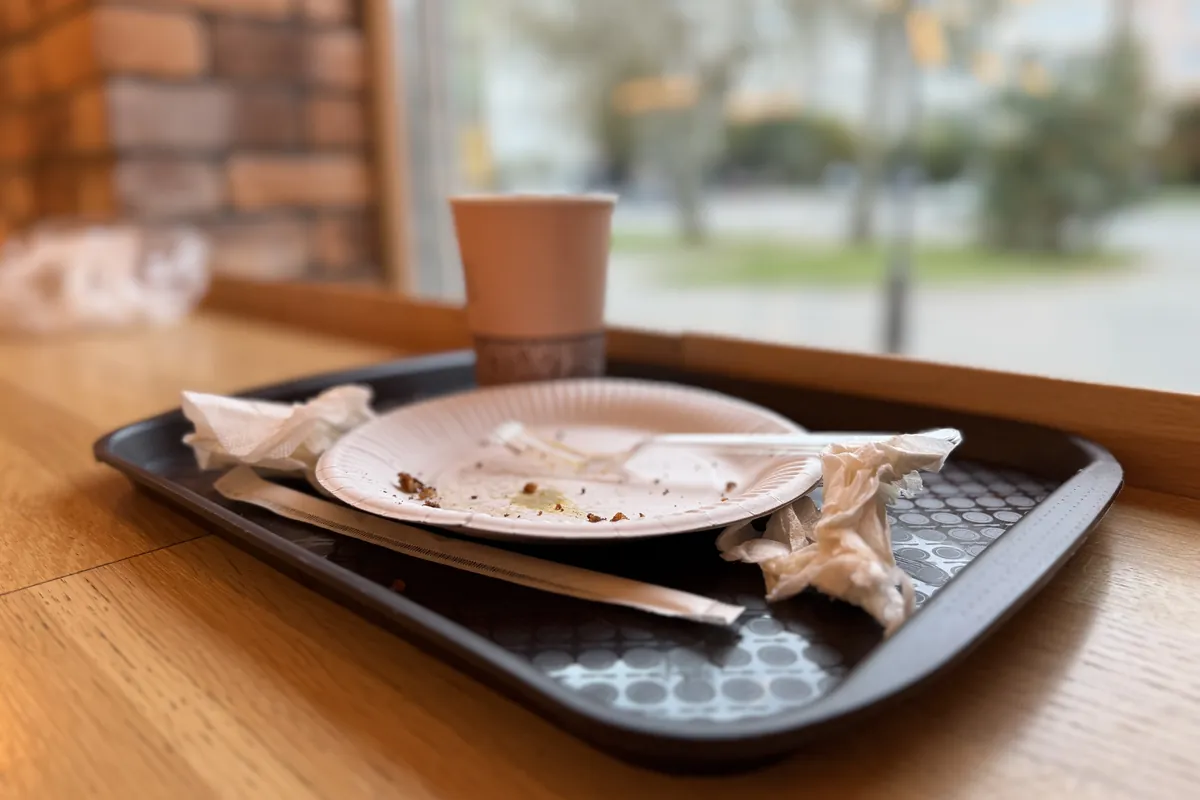 The cafeteria avoided 551 plastic containers, equivalent to an estimated 9.37 kg of plastic.Muthová outlines: “Foodservice providers could integrate similar rewards into existing loyalty programs and combine them with practical measures that make packaging-free choices easier and more visible.”
“But the real test is what happens when the reward disappears. Longer-term, controlled and multi-site studies are needed to determine whether a temporary response develops into a lasting routine.”
Reuse in high-traffic environments.
Insufficient infrastructure, guidance, and convenience in reuse systems can often hinder adoption. Recently, Packaging Insights spoke to Amcor, Coveris, and SP Group to better understand how refill solutions can help reduce packaging weight, introduce recycled content, and push for recyclability.
“Consumers are increasingly looking for solutions that combine environmental benefits with convenience and value for money,” Ellen Seyda, director of Sustainability for Rigid Packaging Solutions International at Amcor, told us.
Some industry players have noted that reusable systems are not always compatible with consumer behavior in quick-service restaurants.
An ongoing case between Environmental Action Germany and national rail operator Deutsche Bahn highlighted the tension between single-use packaging regulations and the practical implementation of reusable systems in high-traffic settings.
Similarly, McDonald’s Netherlands violated Dutch single-use plastics rules, following an investigation from the Dutch authority. While the fast food giant committed to changing its in-house options to reusable packaging, a spokesperson told us that it has also “consistently highlighted that the current [reusable] approach does not necessarily contribute to the environmental objectives” of single-use plastic legislation.
Yet, demand for refill systems in foodservice environments is growing. Svidroňová highlights that a “relatively simple intervention” can be associated with a “substantial change” in everyday packaging choices.
ReCube, a Hong Kong-based food packaging and tableware rental service start-up, previously expanded its partnerships to include universities and the Hong Kong Science and Technology Parks Corporation, where its rental service is being introduced in canteens. The company rewarded its customers for returning containers through an app.