
Tom Holland’s Bero taps glass packaging to elevate non-alcoholic beer

Key takeaways
- Tom Holland-backed Bero has launched its Kingston Golden Pils in glass bottles alongside its existing aluminum cans.
- The brewery says glass will help expand non-alcoholic beer into bars, restaurants, and hotels.
- Bero’s move reflects wider beverage packaging trends toward premiumization as the non-alcoholic beer category continues to grow.
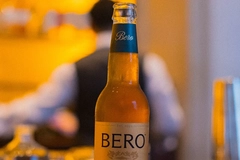 (Image credit: Bero).
Bero, a premium non-alcoholic beer brewery co-founded by Tom Holland and John Herman, has launched its signature Kingston Golden Pils in a glass bottle, alongside its existing aluminum can packaging. According to Bero, it is the first brand to introduce non-alcoholic beer in a glass bottle in the US.
“While cans remain the dominant format for non-alcoholic beer, glass is growing in prominence by consumer demand, currently representing just over a quarter of the category, and has long had a natural place in restaurants, bars, and hospitality settings,” says Bero.
“Before Bero launched — before the artwork for our cans was even finalized — we envisioned the brand in a glass bottle,” comments John Herman, co-founder and CEO of Bero. “There’s something distinct about the experience of glass: how it feels in your hand, how it pours, and even how refreshing the beer feels to drink.”
“That experience has always been part of what we wanted Bero to become. We developed this bottle for the places the category is going next — bars, restaurants, hotels, and beyond — bringing our beer into a format that has been missing from the modern craft non-alcoholic beer space.”
Glass targets growth
As the non-alcoholic beer category continues to grow, the launch allows Bero to meet consumers across more occasions, from the on-premise experience to enjoying a bottle at home.
The brewery cites global beverage alcohol data projecting non-alcoholic beer volumes to reach 18% annual growth in 2029, highlighting the category’s growing significance within the broader beer market.
Bero explains that its decision to integrate glass packaging is a response to the growth of the non-alcoholic beer category, highlighting that alcohol-free beer is “increasingly showing up alongside traditional beer at the table, behind the bar, and across occasions.”
The offering is available in select bars and restaurants across the US and UK and online.
The move comes amid broader premiumization trends in beverage packaging. In an interview about their latest alcohol packaging solutions with Packaging Insights, Frugalpac, PulPac, and UPM Adhesive Materials pointed to the increasing relevance of upscaling as the industry shifts.
Also targeting the premiumization trend, Vetropack unveiled a lightweight and reusable wine bottle this summer.
Campari Group launched a design for its glass Aperol bottle featuring a ripped textured design and an embossed monogram.