
Rissmann launches paper-based box for luxury fragrance gifting

Key takeaways
- Rissmann’s paper-based Shell Box targets luxury fragrances, wine, and spirits, with a controlled opening designed to enhance the unboxing experience.
- Its fixed structure and interchangeable outer covers support seasonal collections, Advent calendars, and influencer kits.
- The monomaterial design avoids magnets and mixed components, combining premium presentation with easier recyclability.
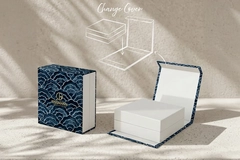 (Image credit: Rissmann).
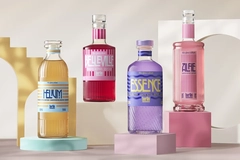
Rissmann has launched the Shell Box, a paper-based box for luxury fragrances, particularly suited for seasonal gifts. The solution boasts a “smooth and controlled” opening for a “discovery experience” that aligns with current unboxing trends.
The box, also suitable for wine and spirits, aims to combine modularity with visual impact for brand storytelling and caters to consumer demand for recyclable packaging solutions. The interior of the Shell Box is customizable to accommodate inserts, molded pulp, or another box. The outer layer is also adaptable to cater to seasonal celebrations, like an Advent calendar.
“The concept uses one fixed box structure with interchangeable outer covers. Only the print/design changes are fixed, so the same box serves Advent calendars, influencer kits, or seasonal collections for Valentine’s Day or Christmas, without retooling production,” a Rissmann spokesperson tells Packaging Insights.
Increasingly, products and the packaging used to house them are commemorating festivals and celebrations. In February, Coca-Cola marked the Lunar New Year with a series of culturally inspired packaging designs across Southeast Asia and China, blending traditions with its brand storytelling. Earlier, Lush celebrated traditional Muslim holidays with its fifth annual Eid collection in time for Ramadan.
Simpler packaging structures
Rissmann’s box is only made from paper and cardboard. Monomaterial solutions are increasingly popular in the packaging sector as regulations like the EU’s Packaging and Packaging Waste Regulation demand recyclability.
The spokesperson continues: “Being a monomaterial paper solution, the box combines a premium, photogenic presentation, due to a built-in display stage, with easier recyclability as it has no mixed components like magnets, and efficient industrial manufacturing.”
Packaging with other material components or multilayer systems is often harder to recycle. Earlier this year, Packaging Insights spoke to Amcor, Innova Market Insights, Stora Enso, and Polymateria to examine how packaging sustainability initiatives can engage consumers and ensure regulatory compliance.
From protection to presentation
Rissmann’s Shell Box also taps into the unboxing experience trend, driven by social media optics and influencers’ video presentations of sponsored gifts.
“The opening relies purely on paper engineering, no magnets, no added components. A single, controlled movement shifts the box from protection to presentation, with balanced construction holding the open position steady on its own,” the spokesperson tells us.
Earlier this year, Personal Care Insights spoke to cosmetic subscription brand Ipsy about how Gen Z consumers are the main drivers of "unboxing" culture as they continually gravitate toward joy-driven, surprise-led beauty experiences.
“Gen Z sees shopping as a sharable experience, not just a transaction… Unboxing culture is a big part of the experience, so the reveal moment feels participatory and social, as many members share and discuss their assortments on Reddit and TikTok,” Stacey Politi, Ipsy’s chief marketing officer, told us.
A 2025 Mondi e-commerce report pointed to a “generational tug-of-war” in how the unboxing experience is perceived, with Gen Z deeming it important, unlike older generations. TNT Group has also noted the importance of unboxing in the luxury personal care space, highlighting the growth of experimental packaging types.