

Supplement packaging balances convenience, sustainability & portion control

Key takeaways
- Stick packs, sachets, and other portion-controlled formats are gaining ground as consumers seek portable nutrition.
- Refill pouches, rPET jars, fiber closures, and monomaterial designs are helping brands reduce packaging materials.
- Packaging developers must balance sustainability and accessibility with barrier performance and evolving regulatory requirements.

Growing consumer awareness of health and nutrition is driving innovation in the supplement packaging space, as formats that cater to convenience, sustainability, and portion control evolve to meet regulatory standards.
Packaging Insights speaks to Great Earth and ACG Group to understand how format, material, and regulatory pressures are reshaping supplement packaging design.
According to Innova Market Insights’ Category Survey 2026, 38% of consumers have increased their consumption of sports and functional nutrition.
Health-forward convenience was identified as a Top Packaging Trend for 2026. Smaller, portable packaging, especially in liquid formats, is increasingly popular and influenced by health trends, such as GLP-1 weight loss medications.
“Convenience is the non-negotiable baseline of nutrition packaging. Consumers state strong preferences for sustainability, but their behavior tells us something more precise: anything perceived as an inconvenience will be rejected,” Patrik Falk, CEO at Great Earth, tells us.
“The brands succeeding today are those that treat convenience and sustainability as one design problem rather than two competing ones.”
Trending formats
Nutrition packaging formats range from bottles to blister packs. Aaron Quinn, head of business, Europe, Vantage Nutrition — ACG’s nutraceutical development and manufacturing business — tells us that stick packs and single-serve flat pouches are experiencing the fastest growth globally.
“These formats are particularly well suited to hydration, electrolytes, collagen, and functional powders, where portability and accurate portioning are central to the proposition,” he adds.
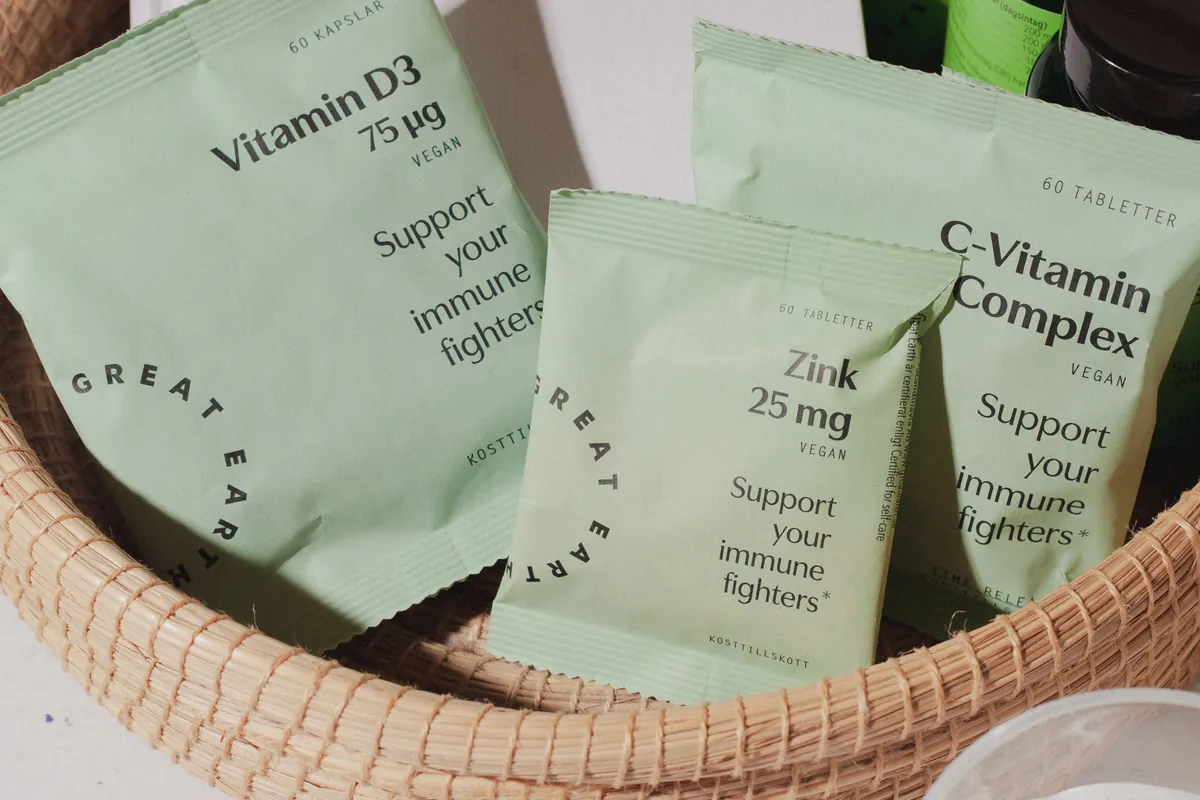 Great Earth says refill pouches can reduce packaging material by 80–90% when paired with durable rPET jars (Image credit: Great Earth).Falk also observes the rise in single-serve formats, but points to the increase in refill pouches paired with a durable base container, which aims to replace single-use plastic formats.
“A robust recycled PET (rPET) jar can replace many single-use packages over its lifetime, and combining it with lightweight pouches achieves an 80–90% material reduction without inventing an entirely new packaging system.”
Falk outlines refill solutions as moving from niche options to consumer expectations. “More actors in our industry now offer it, which raises the bar for everyone.”
Data from Innova Market Insights outlines that bottles are the most common packaging format used for nutrition, with flexible pouches gaining momentum.
Falk states: “There is a tension the industry needs to be honest about: single-dose formats multiply packaging per serving. Our view is that they make sense where dosing precision or hygiene genuinely requires them, while everyday supplementation is better served by durable containers, refills, and right-sized packaging.”
While many view single-serve nutrition formats as a response to consumer demand for portion control and convenience, some have noted that it creates additional packaging waste.
Quinn says that, despite some clear trends in packaging type, regional differences, and category-specific preferences, there is “no single packaging format” in nutrition.
“Consumers in different markets have established expectations around bottles, blisters, sachets, stick packs, pouches and tubs, and these formats can carry very different perceptions of quality, efficacy, convenience and value,” he outlines.
For capsules and tablets, Quinn says that bottles remain common, while blister and unit-dose formats can be preferred where consumers expect product protection, hygiene, tamper evidence, and portability.
He adds: “Larger sports-nutrition formats similarly continue to favor tubs or, increasingly, resealable pouches, depending on the market and consumption occasion.”
Material innovations
In global nutrition packaging launches from July 2025 to June 2026, the top packaging material was plastic, making up 83% of launches, according to Innova Market Insights. Fiber was second, with aluminum product launches on the rise.
Another packaging trend that Falk identifies is a material development, with fiber-based and monomaterial solutions increasing. In 2025, Great Earth switched all its portfolio to paper closures following a pilot launch with Blue Ocean Closures.
“Every new production batch receives a fiber cap, and fully implementing this saves 2.6 metric tons of plastic per year, on top of the 95% plastic reduction per cap,” continues Falk. The closure won Packaging of the Year at the Swedish Recycling Gala.
At Vitafoods 2025, Sonoco presented its recyclable GreenCan and EnviroCan rigid paper packaging ranges designed to support health, nutrition, and supplement companies to meet sustainability targets.
“Monomaterial construction, and the shift to transparent or white plastic where plastic remains, is what makes automated sorting work,” adds Falk.
Quinn says that ACG Packaging Materials provides specialized, high-performance flexible barrier structures, such as Unidose unit-dose packaging films, for single-use, single-serving supplements and powder formulas.
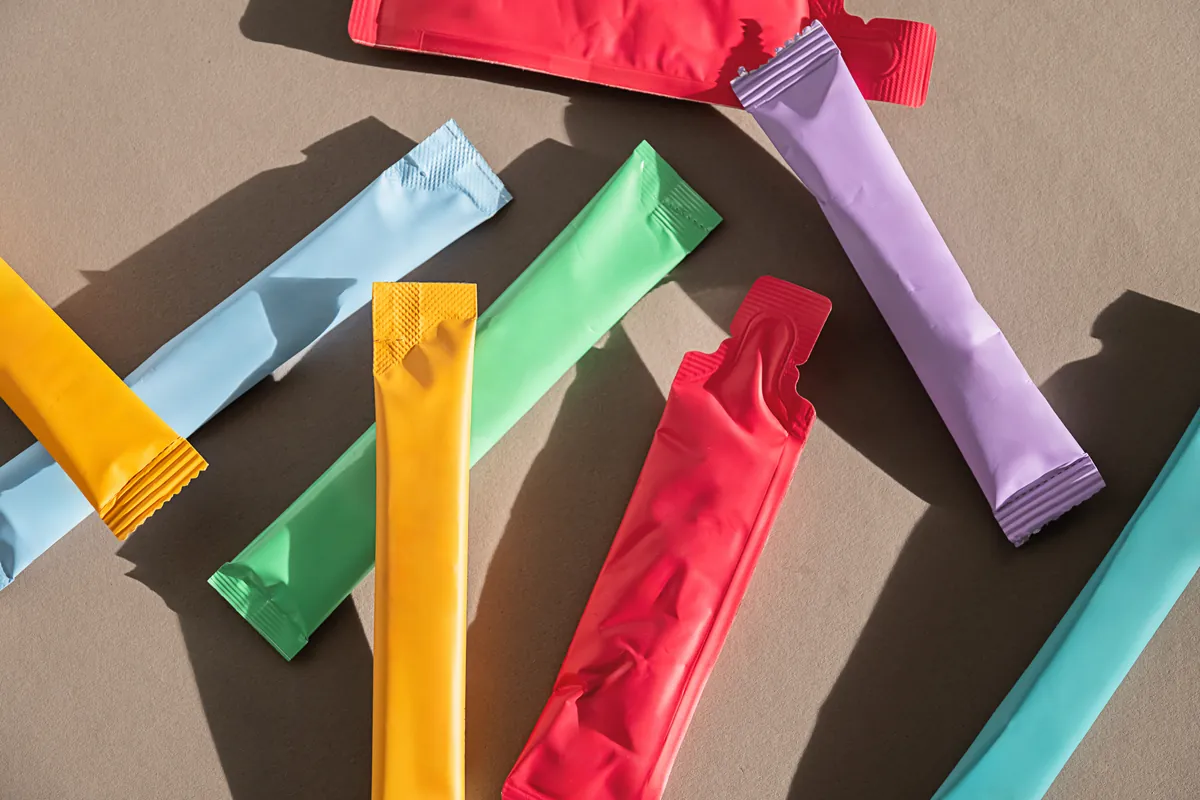 Vantage Nutrition identifies stick packs and single-serve pouches as the fastest-growing nutrition packaging formats globally.“These materials deliver the precise moisture and light barrier protection essential for active ingredients while enabling flawless, high-speed line formation,” he explains.
Earlier this year, ACG Packaging Materials launched SuperPod, a cold-form blister packaging solution that enables blister cavities to become “dramatically smaller” through material reduction, while maintaining barrier performance and machine runnability.
Single-serve and portion control
These formats and material trends are underpinned by consumer demand for convenience and portion control in the health and well-being space, according to the experts.
Jochen Scheil, VP of Global Sales and Business Development at ACG Packaging Materials, says that the sector is moving from large bulk tubs to on-the-go, portion-controlled solutions.
“Increasingly, brands are designing around daily routines, travel, gym use, trial, subscription, and personalized nutrition,” he adds.
Falk refers to Great Earth’s refill jar as the “clearest example” of nutrition packaging that caters to convenience: “The consumer keeps their original jar, which is made of rPET, tested to last at least eight years, and buys a lightweight refill pouch containing the same product.”
He says that the pouch uses 95% less plastic than a new jar, is lightweight, and sorts as soft plastic in recycling streams. Last year, Greiner Packaging provided Orthomol with rPET packaging solutions for dietary supplement vials that reportedly upgraded product quality and production capacity.
Scheil says that the demand for portion-controlled options is driving growth in pre-measured stick packs and sachets, daily-dose systems, unit-dose blisters, resealable pouches, and other formats that “make adherence and portion control easier.”
Meanwhile, Falk says consumer demand for portion control is innovated through data, rather than packaging.
“Our digital needs test gives each consumer a personal recommendation based on lifestyle, diet, and goals, so they buy and take what they actually need instead of relying on single-dose formats that multiply packaging per serving.”
Full product accessibility
Another element of consumer convenience that nutrition packaging that is often “overlooked” is accessibility, according to Falk. Supplements are often taken daily, meaning their packaging is handled frequently.
“Our fiber-based caps, developed with Blue Ocean Closures, have a natural friction that plastic lacks, so less force is needed to grip and open the jar,” he explains.
“That is better for everyone, but decisive for consumers with reduced hand function. Sustainable material choices can improve the daily user experience as much as the footprint.”
In a recent conversation with Packaging Insights, Adam Watson, founder of The Sanctuary, a US-based nonprofit focused on early-stage disability recovery, argued that packaging must be accessible beyond the “first successful interaction” with a primary closure and continue throughout a product’s use.
Nutrition pack challenges
As regulations like the EU’s Packaging and Packaging Waste Regulation (PPWR) and EPRs worldwide aim to increase recycled content in packaging, demand for fiber-based alternatives in nutrition is increasing, says Falk.
“We have come far with fiber closures, refills, and improved fill rates, but we are now auditing our entire packaging portfolio systematically. Our principle is to meet the coming requirements before they enter into force.
Between July 2021 and June 2026, there was a 9% increase in recyclability claims for supplement and sports nutrition launches, as well as a 9% increase in Green Dot Certified claims.
ACG’s Scheil highlights that nutrition packaging must increasingly balance reduced packaging material and product protection.
 ACG Packaging Materials says portion control is driving demand for stick packs, sachets, daily-dose systems and unit-dose blisters.“A packaging solution that compromises product stability ultimately creates a different sustainability problem through product waste,” he says. ACG offers recyclable monomaterial, biodegradable, and halogen-free packaging materials that aim to reduce environmental impact without sacrificing long-term shelf life.
Another challenge facing nutrition packaging development is cost, adds Falk. “Sustainable materials still carry a premium over virgin plastics, and nutrition is a price-sensitive category.”
Great Earth’s rPET jars are recyclable and are said to offer barrier sensitivity for certain ingredients, but Falk explains that the “plastic-free materials we ultimately want to move toward cannot yet match that protection on their own.”
Additionally, he notes that recycling infrastructure varies dramatically between markets.
“For us, the biggest challenge is also our next goal: the jar itself. During 2026, we began exploring material solutions that could replace today’s rPET jar. It is early, and we are not promising finished answers this year. But the direction is clear: we want the entire package to be possible without plastic.”
Scheil concludes that the trend in nutrition packaging is toward smarter, more convenient, and more sustainable packaging, but “increasingly tailored to the product, the consumption occasion, and the expectations of the local consumer.”