



Webinar preview: Top Packaging Trends 2026


Key takeaways
- EU regulations are pushing packaging toward true circularity with measurable sustainability.
- Digital infrastructure and data standardization become essential for compliance and innovation.
- Smaller, fit-for-purpose packaging supports convenience, wellness, and food waste reduction.

Ahead of Packaging Insights’ Top Packaging Trends 2026 webinar next Thursday, we sit down with our expert speakers, Nerida Kelton, vice president for Sustainability and Save Food at the World Packaging Organization, Paul Foulkes- Arellano, circular growth consultant, and Alisa Selezneva, market research consultant at Innova Market Insights.
You can register for the webinar for free here.
As a once loosely regulated packaging industry continues to contribute to plastic pollution, innovation in the sector is currently marked by a global regulatory push toward a circular economy.
“EPR regulations, single-use plastics regulations, and banning chemicals of concern are just some of the key areas that more and more governments across the globe are moving toward, if not already implemented,” says Kelton.
“These regulations will see a significant shift in the way we design primary, secondary, and tertiary packaging, to ensure that we design our waste at the start.”
Sustainability is no longer a marketing tool but a legal obligation. Recyclable, reusable, and paper-based solutions have emerged as potential avenues to attain circularity.
Foulkes-Arellano says: “Monomateriality and material substitution have been the prime focus [of the industry] for the past decade. The packaging industry has responded with speed and rigor.”
Kelton concurs, adding that packaging technologists and engineers need to design monomaterial packaging with as much recycled content as possible. She also explains that packaging companies must eliminate chemicals of concern, with an increasing amount of consumer backlash growing toward “chemical cocktails” in plastic packaging.
 Foulkes-Arellano says that innovation in reusable and recyclable packaging systems is lacking.However, Foulkes-Arellano adds that innovation in reusable and recyclable packaging systems is lacking. “Many large-scale pilots have failed because mass retail is set up for linearity, not true circularity.”
He suggests that brands could set up shared cleaning and logistics infrastructure, lowering the cost of reverse logistics — a common critique of reuse systems. “But even [attempts at] that have failed.”
“Substantiated sustainability”
Circular packaging innovation is not without its setbacks. Rolled-back policies, industry lobbying, and greenwashing campaigns have eroded consumer trust in the industry. Many greenwashing cases have ended up in court.
In response, a growing body of consumers and regulations are demanding that sustainability claims be scientifically validated. Innova Market Insights recently announced “Substantiated Sustainability” as its Top Packaging Trends for 2026.
“The EU Packaging and Packaging Waste Regulation (PPWR) is shifting sustainability from broad claims toward legally accountable proof,” Selezneva explains.
From August 2026, every packaging type placed on the EU market will require a signed Declaration of Conformity, meaning brands are legally responsible for proving that packaging meets sustainability requirements.
She highlights that a “supplier certificate alone will no longer be enough.” Instead, companies will need detailed visibility into coatings, inks, adhesives, and material layers.
“This is pushing innovation toward measurable recyclability, lifecycle analysis, monomaterial structures, and packaging designed around real infrastructure performance rather than marketing perception.”
Holistic data infrastructure
“Substantiated sustainability” is intrinsically linked to Innova Market Insights’ second packaging trend for 2026, “Digital-enhanced Designs,” says Selezneva, as scientific validation increasingly depends on successful digital infrastructure.
“The PPWR is effectively forcing packaging system digitalization because substantiating sustainability at scale requires structured, machine-readable packaging data,” continues Selezneva.
She argues that the biggest challenge to adoption is not the technology itself, but the data infrastructure, or lack of, surrounding it.
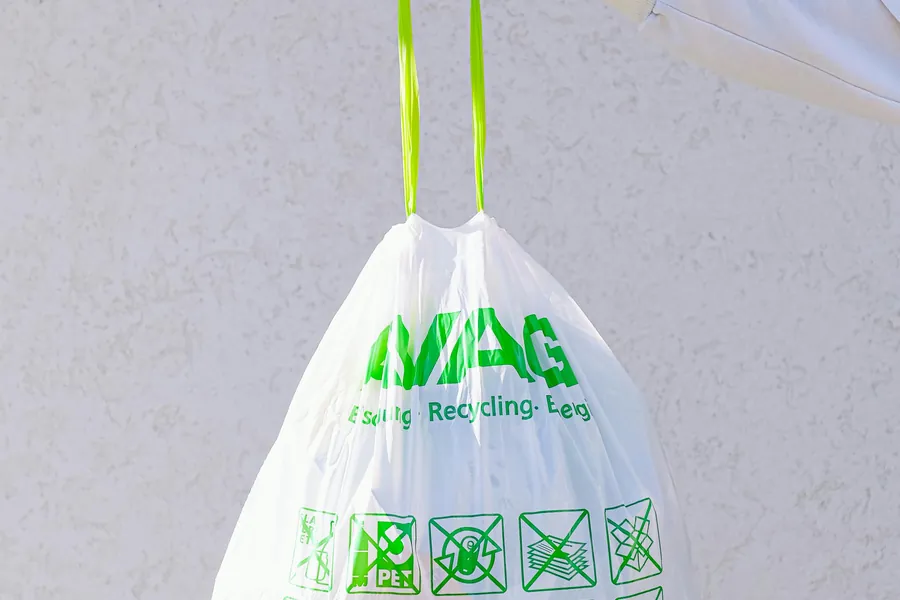 Substantiating sustainability at scale requires structured, machine-readable packaging data, says Selezneva.Packaging information is often spread across different digital formats: emails, Excel files, PDFs, and multiple suppliers across the value chain. “So the challenge is collecting, standardizing, and digitizing packaging data in a way that AI systems, digital passports, QR-linked platforms, and compliance tools can actually use,” says Selezneva.
Kelton adds that harnessing the power of data is vital for the future of the industry, including improved packaging specifications, LCAs, the use of recycling methodology assessment tools and more. “2D codes and QR codes will also play a key role for brands and consumers.”
“To be able to meet the regulations, brands will need to take ownership of their material and packaging data,” she notes.
Portion sizes
Smaller, portable packaging sizes are increasing, driven by the demand for healthier lifestyles and on-the-go solutions.
Selezneva notes that while smaller formats can support convenience, wellness routines, and food waste reduction, they can also increase “packaging intensity.”
Meanwhile, she argues that the industry is currently debating whether all products need extremely long shelf lives.
“The shift is toward ‘fit-for-purpose shelf life,’ using only the level of material complexity needed for real consumption behavior.”
Moving beyond “box ticking”
Foulkes-Arellano admires that the packaging industry is “highly sophisticated” compared to the 1980s when he started his career.
 For Kelton, the next phase of the packaging industry will be determined by EPR legislation.“The packaging industry was one of the first to implement stringent scientific criteria, and one of the first to push for better external regulation.”
He adds that the industry is now ready to acutely assess and tax packaging on its true environmental impact, “using the planetary boundaries and measuring for long-term toxicity.”
However, he argues that sustainability metrics, like weight and carbon footprint, are “too simplistic” for the current packaging industry. “We need to take steps now to encourage genuinely environmental packaging in law, not just box ticking.”
“Serious environmental legislation will encourage a whole new wave of innovation like alternative fibers, biopolymers, and shopper-friendly reuse systems.”
For Kelton, the next phase of the packaging industry will be determined by EPR legislation.
“Once the dust has settled, I would like to see more R&D for not only new materials, but also looking at improving the ones we have and also advancing recycling and reprocessing technologies to advance the industry even more in the future,” she concludes.